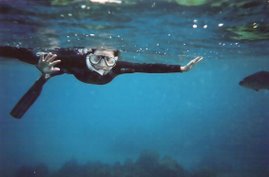
Aloha from Hawai'i. I am being silly and exploring nerdy visual-design-data resources online while the sun, ocean, beach and valley beckon outside. Before I turn off this computer, I want to share this awesome resource with y'all (which my neighbor-friend Brian Sullivan sent to me):
http://www.gapminder.org/world/
Showing posts with label poverty. Show all posts
Showing posts with label poverty. Show all posts
Saturday, January 5, 2008

Monday, June 18, 2007
Kenya to London to SF: the shock

[left: "Sony Store" of Kisumu, Kenya. Not exactly the Metreon.]
Imagine this: plugging in your laptop at London Heathrow airport (i.e. the upscale mall that also has international flights) while facing HMV and Dixon’s electronics shops, and finding your keyboard filled with dead insect carcasses that you have to clear out before typing. After a shady-scammy taxi ride in a stolen vehicle and a driver without a license (arranged by the FACES staff!), a nauseating small plane flight from Kisumu, a 4 hour layover in Nairobi, and a 9 hour flight from Nairobi to London, I arrived in the opposite place: a completely engineered, artificial land. Looking out of the window, even the trees and grass and flowers are completely engineered and unnatural.
Imagine this: Just one week ago I was in the back of a truck (posing as a matatu) with a Kenyan woman next to me. She was wearing a ratty t-shirt proclaiming some little league team, and a kanga as her skirt. She was clutching a live chicken by its feet in one hand, a baby in the other arm, and a large sack of vegetables were at her feet. She has been carryng it on her head earlier, since her hands were full. She stared at me the whole trip. Now, on the plane from
It’s different from the feeling you have when you are on vacation in a remote place and then travel back to modern, hyper developed life. Because when you are on vacation, you already have a mental separation in your head with these two places. But when you live and work in a community not as a tourist but as a honorary member of the community, you feel the shock more deeply. How I can navigate these worlds without artificially compartmentalizing them remains a challenge. The Buddhist principle of compassion for all helps me approach it, though this too is challenging to do fully.
Kenya: psyche of the global health worker
What makes someone want to come to Kenya
For those of us who struggle with having meaning in life, global health work can feel like an answer. The US (and I imagine most of the developed world) has a work culture that constantly forces you to prove your worth and to compete with many others who have comparable skills. In these settings, it’s hard to feel like you are adding unique value to your community. They are supersaturated with a ridiculous amount of (maldistributed) resources and highly skilled, highly educated people (also maldistributed). The developing world is saturated with people but not with resources and not with education. As a result, there are a lot of people eager to become skilled and educated to do good work but not enough resources or educators to train them. That’s where we can step in and be useful. That’s where I can do good work.
It’s a combination of the Robin Hood principle and a Chinese proverb: take from the rich, give to the poor; if you give a woman a fish, she’ll eat for a day, if you teach a woman to fish, she’ll eat for a lifetime. Cheezy but practical – and real and meaningful.
Kenya: rawness of living
 [left: pus drained out of a client's lungs by straight IV into the only drainage bag we could find on the island
below: our backyard in Sena: straight up cornfields]

Someone should tell the folks at
I wake up to the sound of twittering birds intermixed with roaring diesel engines without mufflers. I walk 4 km to work on a dirt path next to the highway, hopping over sewage, chickens and walking wide paths around cows and goats. In the mornings, I dodge boda bodas, regular bikes, slow pedestrians, tuk tuks, speed-demon matatus that swerve like crazy, giant buses and trucks spewing out black clouds of exhaust into my face. When I get to work, I thank all the higher beings in the world for sparing my life.
My sweat has dried, making the dust and dirt cling onto my skin for the rest of the day. The sun has already darkened my nose; the rest of my body is covered in the usual conservative Kenyan wanna-be Western attire. The blisters of my sandal-clad feet have already turned into calluses.
I then spend the day working with clinical officers and nurses who haven’t been paid for 2 months because their payor in Nairobi is slow, and it take 5-7 days for salary checks to clear at the local bank. I see clients (patients) who had to sell their family goat in order to have enough money to travel from their rural home to our clinic monthly. I see people who have obviously been ill for many years, but they wait till their disease is too advanced for them to handle at home. So there’s the mama who left her deep wound till her next scheduled visit. And the kid who came in with a giant mass in her neck, most likely a lymphoma. And the skeletal man, skin taut over his bony body with deeply sunken cheeks and eye sockets, who got tested only now, and said that he’d been previously “fine.” Somehow I doubted that.
Even the rain here is RAIN. It’s not the mealy half-hearted foggy drizzles that we get in
Life here is raw. There is little protection from the earth, creatures of all types, the dirt of industrialism. There is no shield from the scammers and the neediest in the world. Most non-black folk here in
It feels good to live more raw. It’s harder in many ways, but so is truly living.
Sunday, May 20, 2007
Kenya: the islands of Suba

I spent a week in Suba District, the district of Nyanza Province in western
I lived in a house-shed without electricity or running water or clean water with three guys on
Kenya: FACES Home Visit
Home visits represent to me the quintessential experience of being a doctor. I get an amazing diversity of background and information about a patient from observing them in their home environment rather than in the clinic. I get the privilege of seeing how they eat, how the sleep, what they do during the day, how they interact with their family, roommates, neighbors. I can assess their sanitation and safety. It much more adequately satisfies the part of doctoring that is a bit of an anthropologist … but goes much further than the anthropologist by synthesizing the information into an intervention that is best suited for that particular patient / subject / person.
The downside of home visits is that often you uncover complicated and difficult issues that you can’t solve. We as doctors are trained all the time to solve problems and “fix” people. This of course is very difficult and a stressful expectation, in any setting – be it clinic, the hospital, or the home. If you go by yourself to do the home visit, which is what I do in the
We went to visit Margaret (pseudonym), a 22 year old with a rapidly falling CD4 count (from 500 to 200 in 3 months) and failure to thrive. She had also been pregnant and miscarried at 7 months at home – one month before our visit. The clinicians had been concerned about her weight loss and falling CD4 count, so they initiated her on HIV antiretrovirals and TB medications. She stopped coming to her clinic visits and the staff were concerned that her family was not supportive, so we decided to make a home visit together.
It started out very strangely. I sat back and let Kendi, the clinical officer, Elija, the community health worker, and Nicolas, the nurse, take charge of the visit. I also wanted to observe how they ran it. The home was small but very neat. Margaret’s older sister kept the two-room home very clean: swept, laundry done daily, food on the table for Margaret. Her sister greeted us at the door and sat with us during the interview. She seemed supportive. Margaret, on the other hand, was lying on a couch, barely moving, with an imperceptive voice. Her face was completely flat. She expressed no emotion, except later, when I sat next to her and asked some more questions. For the first 20 minutes, the clinic staff sat on the other side of the room, bombarding Margaret and her sister with questions, many of which sounded accusatory.
“Why aren’t you eating?”
“Have you been taking all your medications? Show us what you’re taking?”
“Why haven’t you picked your TB medications?”
No one shook her hand, sat next to her, examined her. They mostly spoke with the sister. After the 20 minutes had past, my assessment was that Margaret was suffering from untreated severe major depression, almost a state we call catatonic depression- where the patient is so depressed that they don’t move or speak. She barely spoke, in a whisper, and gave simple one-word responses. When I sat next to her, shook her hand, and spoke with her with much softer tone, she started to cry. She shed tears in the near-catatonic state: no change in her flat expression but now she had tears and mucus running down her face. After she started to wet her much-too-big t-shirt, she grabbed her kanga, which she was wearing as a skirt, and wiped her face. She told me that she was unable to walk, unable to motivate to eat, and lay on that couch all day, not speaking to anyone, not doing anything. She just cried when I mentioned the miscarriage. She didn’t say anything about it. But at least I addressed the elephant in the room.
She had no cough, nothing focal except for muscular back pains. She looked very very wasted: her skin clung to her bones except where it was stretched out for her recent pregnancy. Her eyes looked ghostly and glowing white in the darkness of her home, which has no electricity or windows. I held her skeletal hands while she tried to stand up during my neurological exam. She was very weak and her muscles contracted, stiff and thin.
In retrospect, I suspect that her CD4 drop was in large part due to her pregnancy (it was checked during the start of her third trimester) and that she probably doesn’t have TB, though in a person who was not as severely depressed as her, I would definitely think more seriously of treating for it empirically. I think that she has severe untreated depression, and while the clinicians in
Saturday, May 12, 2007
Kenya: poverty & health

Poverty and Health
Sickness and Wealth
Poverty and health status are inexorably linked. That goes without saying. We wrestle with this fact every day in clinic. You can’t ignore the blatant poverty that our patients struggle with, even if you tried to. It keeps you from doing your work as a health care provider. On the other hand, you can also see it as part of your work. I like to think of being a good health care provider as being an anti-poverty worker. You treat people so that they are healthy enough to work and take care of themselves. The problem lies in when people are too poor to pay for the treatment they need.
Chicken or egg? Chicken AND egg.
During my first week here, a 60 year old mama came in with a deep foot wound, one week old. The wound happened when she was digging through the dirt of her family farm and cut her foot on a piece of jagged glass in the ground (these types of traumas are common here, as there is lots of broken glass and metal in the earth). She came from a rural village about an hour away by matatu. She was widowed, not just once but twice – by her first husband and then by her husband’s brother (she was inherited as part of Luo tradition); they likely died from HIV and passed it along to her. She had to pay 100 shillings one-way to get to our clinic, which is the equivalent to her entire day’s income from selling milk from her small herd of cows. It took her two weeks to save enough money to cover the roundtrip to and from clinic. She didn’t come in when the wound occurred because she couldn’t afford it, so instead she went to a local tribal healer and got some herbs to make a poultice for it.
She looked like she was 80, she was so withered and thin. She was WHO Stage 3 for weight loss; we didn’t know her CD4 count yet. With her HIV infection, she is at risk for invasive infection from her wound. This is especially true since she’s been walking on it with little dressing… and only little broken cloth shoes and a rag protecting it. The wound was deep – I was able to see her subdermal layers and muscles sticking out- almost to the bone. Surprisingly, and probably thanks to her herbal poultice, the wound was clean, and I didn’t see anything overtly infected.
When I tried to refer her to the district hospital near her home to get a tetanus shot, dressings and wound care done, she refused. She said that she couldn’t afford their fees. While the public hospitals are supposed to be sliding scale, people won’t do anything for you unless you pay something, which pretty much amounts to a bribe. Public hospitals here are notorious for providing bad, shady care. I worked in one in Eldoret. I hated it. Patients at this hospital got terrible care, and I felt terrible that I couldn’t fix it for them. There were several deaths every day of young people who died of treatable infections. I cried every day from the seeming futility of in-patient work here.
I don’t blame the patients at all. I would avoid the hospitals too.
I couldn’t stand the fact that this mama was not going to get the care she needed because she didn’t have the 200 shillings to bribe someone at the district hospital. I would suture and dress the wound myself, but there were no supplies I could use. I know that this is no long-term solution, but I decided to give her the 200 shillings to cover the expense. So maybe it’ll help prevent her from getting infected and losing a leg.
Because of the poverty, people will defer evaluation and treatment as long as they can, in hopes that they will get better and avoid any additional financial burden. The other phenomenon is that avoid going to the hospital at all cost (pun intended). Our clinics provide free care. So when they are sick, no matter how sick they are, they come to our out-patient clinics, which are not equipped (AT ALL) to deal with such sick patients. Well, the fact is that the hospitals here are also not equipped, but that’s another story. They are supposed to be better equipped than our out-patient clinics. It is not terribly unlike what our uninsured patients do in the
While I was at the AMPATH Turbo Clinic with Joe Mamlin, two patients were brought in to the clinic completely unresponsive and sick as stink. In the
A couple of such folks come into FACES each week too. What we often admit to the hospital in the
It’s great to see how good out-patient and community support can heal you. It’s more affordable, and often, it works.
Still, some people can’t even afford the few hundred shillings for an out-patient course of medications or treatments, like the 60 year old mama with the deep foot wound. We can’t keep on providing piecemeal doses of money to cover costs. Besides, the mzungus are at the clinic only sporadically. AMPATH tries to address this by providing a large network of waived fees subsidized by a large foundation and grants, along with income-generating programs. AMPATH is unique in how well-endowed, comprehensive and wide-ranging it is. FACES is not so. And the rest of
Poverty feels like a gi-normous, insurmountable problem. It is pervasive in everything we do here.
I can’t even imagine agitating for universal health care in
If you are a good health care provider here, you are an anti-poverty worker.
Subscribe to:
Posts (Atom)