Showing posts with label Suba. Show all posts
Showing posts with label Suba. Show all posts
Wednesday, June 20, 2007
Kenya: video documentary
[You can play a short, 6 min, version of the FACES documentary here. Viva YouTube!]
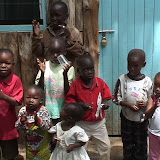
It feels good to be doing creative work again. I’m excited to spend my time brainstorming about sequences, soundtracks, what clips to take out of the 10 hours of raw footage I have to work with. The process is amazing in itself: to be able to ask people probing questions about why they do the difficult work they do, to discover the intricacies of the community in which we work, to have a large group of children climbing over you to see what your filming, to climb the rocks of an island and battle thick swarms of lake flies to take footage no one else has. People are also generally excited to be filmed; it helps them feel appreciated and important for the work they do. Then I get to take all of this and turn it into a narrative that tells a story, constructed to emote what I want.
Rose-colored glasses aside, I also have to deal with the very frustrating aspects of being in Sub-Saharan Africa: the only equipment I have to work with is the stuff I brought with me, on my back. Don’t get me wrong: it’s crazy in itself that I own and carry all of the equipment I need and am producing this documentary, from start to finish by myself and with my own money. I’m proud I can do this (though I wouldn’t mind some help, especially with funding!) Still, I need to deal with some crazy situations, which make the adventure… well, more of an adventure. While on the islands, I had to make sure my batteries didn’t run out (no electricity) and that nothing fell into the water, since we spent 4 hours on leaky wooden boats every day. When the kids climb on me, I need to make sure that the camera doesn’t get dropped or otherwise broken. There is no one but me to fix it. And after digitizing only a small fraction of the clips I think I might use, m hard drive ran out of memory. All 100 gigabyes have been used, which leaves me no room to render or export the sequences I create. So I spend excruciatingly long hours digitizing, then backing up to DVDs, which I run out of. There are no blank DVD-recordable discs to be bought readily in Western Kenya. (Though I bet I can pay some of the guys who pirate DVD movies to get some blank discs… I know where to find them.) Everything has to be planned out just right so that I have the clips I need on the hard drive to make the sequence. All these challenges are time-consuming, but in the end they add to my experience and help me plan for the next time (i.e. bring a damn external hard drive!).
As is inevitable with documentaries involving NGOs and health care workers, people’s speaking skills are highly variable. There is very little of the interviews that looks good or sounds good on screen. I can probably only use 10% of what was filmed, and even then I need to cut out a ton of um’s and stutters and repeated statements. While doing the interviews, which are fun in themselves, you can tell who the good speakers are: Reson gives clear but long and comprehensive narratives; Steve can eloquently describe the touchy-feely philosophy of the organization, and Kwaro, given some time to prep, can give a succinct speech with the stats and facts that you need. All without stuttering. And with a decently loud voice. A few aspects of Kenyan culture don’t mix well with these interviews: people speak with very soft voices and tend to talk in overly formal circles, saying the same thing several times in only slightly different ways. I think that this is why Kenyan meetings are long and boring. And why a lot of my interviews are long and boring. And why Kenyans often complain that amerikans are too loud and direct.
Fortunately, Kenyans like to sing, especially at FACES. So to make up for the soft voices that speak in circular statements, I have some great footage of staff meeting songs and Kids Club chants. Good music, good singing, beautiful scenary, interesting work: this is what is saving the documentary from being ordinary.

Sunday, May 20, 2007
Kenya: the islands of Suba

I spent a week in Suba District, the district of Nyanza Province in western
I lived in a house-shed without electricity or running water or clean water with three guys on
Monday, May 7, 2007
Kenya: photo album
This is my online photo album of photos from Kenya. It includes clinic and work photos from Kisumu (FACES), Eldoret and Turbo (AMPATH), daily living, and adventures, such as to Kakamega Forest. I'll keep adding to it during the trip, so please visit the link periodically during May 07!
 |
| Kenya, April-May 07 |
Subscribe to:
Posts (Atom)