Monday, July 21, 2008

Panthers in Africa


[above: sophy, Charlotte O'Neal with necklaces for Mama Yuri Kochiyama, and YW]


Young Whan and I had the incredibly good fortune of visiting the United African Alliance Community Centre at Imbaseni Village.


Pete and Charlotte O’Neal are Panthers in Africa. Pete is a political exile from his days of activism with the Black Panther Party in Kansas City, Missouri. Charlotte, his wife, was also part of the Black Panther Party in Kansas City but is not officially in exile. They came to Tanzania in 1972 as urban activists, found themselves on four acres of wilderness at Imbaseni in the Meru Mountain region, and learned to build a homestead by hunting, farming, and building their own home.


Now integrated in the surrounding WaMeru community, they have established the United African Alliance Community Centre, a wonderful multidisciplinary centre for arts and education. They provide secondary school-level education to young people in the surrounding village as well as a rich arts and music program. They host high school and college students from (mostly) the US who do village homestays and/or stay at UAACC so that they can work and learn from the surrounding community.


Charlotte invited us to visit – I only had two hours in transit to Dar es Salaam, but Young Whan was able to stay a couple of days. It was wonderful to witness how much she and Pete have built and grown in this community. Check out the photos – and the websites below.


The UAACC website: http://www.uaacc.habari.co.tz/


“A Panther in Africa” documentary about Pete O’Neal: http://www.apantherinafrica.com/

Moshi


[above: aerial view of Kilimanjaro at dawn]


Ahhh, back in Moshi, my home away from home. It’s funny how familiar everything feels, even though we stay in hotels. I stay at the familiar Bristol Cottages, where Mama Sakina and Mr. Aggarwal and the staff take good care of me. I also have my friends Mei and Joelle, transplants from Chengdu, China and Southern California (respectively) who always welcome me back. They speak Kiswahili and know the lay of the land. It is always good to have advice and guidance from two local strong, sassy and experienced women who are also living far away from their native homes.

Plus, Mei owns Panda Restaurant in Moshi and cooks us real home-style Chinese meals. She uses winter melon and greens from her own garden. And she makes amazing fresh tofu each day!!! How spoiled can you get: fresh tofu and Chinese greens in the mountains of Tanzania.


Joelle first landed in Moshi to teach at an NGO secondary school focused on providing education to the most vulnerable young people (often orphans). She’s now moved on to a women’s village health and empowerment project in Shimbwe, a mountain village near Moshi. I am hoping to link Joelle and the women in Shimbwe to a potential microfinancing project in which the women would make cool accessories out of Tanzanian fabric to be distributed by a San Francisco-based textile artist.


The training in Moshi went as well as a training goes. There were 15 relatively interested and engaged participants from the Kilimanjaro region – lots of rural mountainous villages. As usual, the participants were a mix of nurses, clinical officers and medical officers of highly variable experience, English proficiency and background knowledge on HIV care and treatment. There were no pharmacists this time, though there should be. Happily, as a group, they seemed to understand some key concepts (antiretrovirals, TB diagnosis and treatment, treatment failure, paediatric HIV issues…) and did remarkably better on their post-training exam than on their pre-training exam. I only hope that they are able to remember what they learned and take it back to the health centres in which they work. That’s what really counts.

Chumbe Island


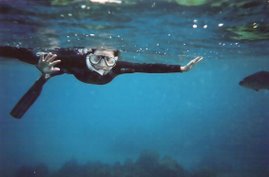
Chumbe Island is amazing. It is an island previously used as a military post and later bought by a German environmental NGO. It is now an eco-resort and official environmentally protected area. The result is a group of self-sustaining solar-powered and rain-water huts, an ecology teaching center, and the best diversity of coral reef in all of East Africa. I saw some really crazy coral types that I had never seen before while snorkeling in the protected zone around Chumbe. The water was a bit turbulent, so the visibility in the photos I took was limited – the photos don’t do the actual coral justice. You’ll just have to visit the island yourself.


The eco-bandas were incredible: rainwater is collected and filtered through extremely fine ceramics (something nutty like 0.0000002 mm pores) to remove even microbial particles. Solar panels collected enough energy to power a few lights and a little fan. A solar tank warmed the rainwater to take showers with. My shower was hot! The toilet was a compost toilet – and didn’t smell at all because it was done well and cared for. And the used water was filtered and recycled to be used to water plants.


It was cool to see a place staffed entirely by East Africans (most were local Tanzanians, and one transplant Kenyan) trained in and teaching hardcore environmental protection practices.


I only wished we stayed longer. Maybe another time.

Zanzibar tena (again)


This was my second trip to Unguja Island, Zanzibar. Stone Town was as beautiful and captivating and haunting as usual.


You may recall my stories from March 08 about the East African slave trade as it relates to the rise and fall of Zanzibar. This time Young Whan and I visited the old slave market in Stone Town, which still has the horrifying traces of the whipping post and the holding cells (75 people in a cell about 10 feet by 6 feet and only three small air holes). The Anglican Church built over it – an interesting relationship between colonial missionaries and the slavery emancipation movement. A couple of the missionaries became leaders in that movement. Many of the freed slaves converted to Christianity afterwards. Hmm.


While the East African slave trade was fueled by the Omani sultans (and thus the slaves were taken from various East African regions to the Middle East, Indian sub-continent, and Southeast Asia), they only started after they got the idea from Portuguese colonialists, who were stealing people from Mozambique as slaves to Brasil and Europe. Still the trade was just as brutal, and slaves were whipped with the tails of stingrays (with the poison and spurs intact) to test their “strength” and tolerability to pain.


After slaves gained their “freedom” in the late 1800s, many stayed in Zanzibar despite being far from home and created a new mixed African community. The Omanis still retained a great deal of power with the spice trade. In the 1960s there was a massive uprise among the black African Zanzibaris, and thousands of non-black people in Zanzibar were massacred. The Zanzibar Revolutionary government set up shop, and were said to govern with socialist and communist principles, redistributing land and homes to poor black Zanzibaris – but without as much planning, organization, long-term support, and (probably) financial resources as in Cuba. It’s really interesting to see the crumbling blocks of Stone Town Arabic style mansions next to the Soviet-style blocks of housing projects.

Sunday, March 16, 2008

Tanzania photos, album #3 of 3


This is my third and final Tanzania photo album. This album includes shots from Same, Huruma, Marangu, Keni health centre, Rombo district, Moshi, Stone Town and Prison Island Zanzibar. Click on this teeny slideshow to open a new window and see a bigger version of the photos (recommended). Enjoy!

Wednesday, March 12, 2008

Zanzibar

above: kid next to the "door of no return" (which slaves passed through to leave their home forever) at Changuu Island, Zanzibar


dhows anchored at Stone Town, Zanzibar


twilight over Stone Town


aerial of the reef around Unguja island, Zanzibar


hallway at Beit-Al-Amaan ("house of peace")


chillin at Beit-al-Amaan's lush living room


Zanzibar.


Ahh… hearing the name alone makes people feel like they’re on an exotic tropical island. It needs no other embellishment.


Apparently the name was originally “Zangh Bar,” which means “Coast of the dark people” or “Negro Coast” in Arabic. For centuries Arabic colonizers and merchants used it as a base for its Indian Ocean slave trade. It’s a bit more racist and less romantic when you know that, eh?


The rest of Team Tanzania (the guys who are part of the crew from my department at UCSF who come to Tanzania regularly) was exuberant and happy that we were finally on a holiday in Zanzibar. Everyone loves Zanzibar. Even John and Royce, who were already back in San Francisco, were ecstatic for us. They all knew that we had worked hard and felt wasted.


Who wouldn’t love being in a gorgeous coastal environment with the richness of blended African, Arab and Indian cultures?


Zanzibar is gorgeous and lush. It still has intact, healthy coral reef full of fish around the islands other than Unguja, where Stone Town is.


But there is an element of Havana, Cuba in it. The concept of a former bastion of ill-gotten wealth which fell into chaos and redistribution. But unlike Havana, the new Zanzibari government was not very organized about the redistribution of land and buildings. Stone Town was previously a wealthy slave and ivory trading port, built on the backs and blood of black Africans from the interior. Countless black Africans were killed in the process. After centuries of slavery, there was an uprising by black African askaris (soldiers) in the 1960s which killed off nearly 20,000 Arabs. Since there had been quite a bit of intermarrying, it was probably quite arbitrary who got selected for murder – perhaps the lighter-skinned people, perhaps the people who owned more stuff. People say that Zanzibar is now a happy blend of people, but I wonder how much of this is the sheen sold to tourists like me.


By the end of my two months in Tanzania, I was happy to wander the alleyways of Stone Town with just my compass guiding me… and enjoy the warmth of the Indian Ocean and the living beings in it. But I am very ready to go home to San Francisco.


And I am happy that I did not decide to live abroad semi-permanently for my next job.


I would be a terrible expatriate. I don’t enjoy any part of that culture: creating insular little communities, living in a gated house with a house-girl and askari, driving around in a hulking SUV, having others cook and clean for me, going out to bars with the other ex-pats – most of whom drink and smoke and generally do nasty things, especially to the people native to the community (i.e the black folks). It is an obnoxious and unmindful lifestyle.


If I move to a place like Moshi or Tabora or Kisumu, I might try to make better friends among my black colleagues, but I could never really be integrated into their communities. There would be too many barriers from both sides. There are some ex-pats, especially the white people, who say they have good Tanzanian friends, but on closer inspection, theirs is really a paternalistic relationship – the ex-pats “buy off” their “friends” by giving them CD players, extra money, nice dinners at restaurants, scholarships. I cannot build friendships in this way. It’s just not balanced or sincere when it is clouded by favors.


It has become clear to me that I travel to East Africa really to work and build better HIV/AIDS care – not for vacation, not for the love of being an ex-pat, not for the lifestyle. Of course, there is the special-ness and challenge of working in a totally different culture from my own. But the magic veil of “otherness” wore off early on, when the reality of the work, of the sick and dying patients, set in. My skills and training have value here, if I use them well.


So – I am happy to return to my own “native” community in the Bay Area. This is where my partner and my family are, where I am building a sangha, a community of people who support my practice in being a good person, a person of lovingkindness.


With their support, I can rebuild my strength and resolve to return to Tanzania in July to continue this work.

i'm eating real chinese food in Tanzania!


above: Panda Chinese restaurant staff, Feng Yu (the owner) and me in Moshi


There are few things in life as lovely as eating freshly-made tofu, garden greens sauteed in garlic and good rice made by a new friend, who also happens to be a sassy, tough, adventurous Chinese-in-a-foreign country woman.

same same


above: Guy, Bonifas, the ART nurse and peer advocate at Keni Health Centre, Rombo district


Sara, a nurse, Steve and Keni Health Centre patients


above: the Matron of Keni Health Centre with Bonifas, the HIV clinician, in the clinical room


Same: everyone pronounces the district and town name as “Sah-may.” But there are some Tanzanians who half-jokingly tell the story of the British colonialist who drove through the Same region in his jeep, watching the rolling hills behind the expansive valley floor and announced that everything looked the “same.” And as another unfortunate vestige of colonial power, the name stuck. But it sounds better pronounced “Sah-may.”


Sadly, by the fourth week of my mentoring-of-mentors work at the HIV clinics, things were really starting to feel same same. Same was this way. Huruma was this way with the roll-out due to poor district leadership.


Clinics had run out of basic HIV drugs, such as efavirenz. Most clinics we visited had broken CD4 machines, which (when working) provided one of the few critical lab tests that we needed to manage patients with HIV. They have the machines but no one had been trained on how to maintain or fix them.


During a majority of the clinics, I was the only clinician there in the mornings. The patients very patiently waited from 7 am to see them. But I had to run around and look for the Tanzanian clinicians so that they could see the patients queued up to see them. It made me wonder what happens when there are no visitors like me to pull them from their meetings and such to go see patients. And then I realized from the patients what had been happening. Apparently sometimes only the nurses saw them, and even though they were untrained to give HIV medications, they gave them medication refills without doing a clinical assessment. Sometimes the hurried clinician came at 1-2 in the afternoon and just whipped through the long line of patients, nodding at their complaints but not doing a damn thing about them. Just refill, refill, refill, follow-up next month.


The reason I found this out was because when I saw the patients with the Tanzanian clinicians, they would tell us about some problem they’ve had for the last six months. Or over the last three years. These were big things, like “their legs have been on fire all night.” (A way that patients describe their peripheral neuropathy.) Or “I have been coughing and losing weight for the last three months but they keep on giving me amoxicillin and it doesn’t get better.” Or “last month they did not give me the yellow pill I usually take.” (This is how I found out that some of the sites had had be out of efavirenz, a vital HIV drug, for one or two months.) Yet there was no note of anywhere in the chart. The patients were probably just hurried through a long line, and the clinician just nodded to their complaints and gave them refills.


The patients put up with terrible service and even worse clinical management. Yet many of them remain grateful that they are receiving medications at all. The culture of acceptance is deeply ingrained. There is no ACT UP Tanzania.


There are, of course, a few nurses, clinical officers and medical officers who possess decent medical acumen, but sadly I found a vast majority of the clinicians to be very poorly trained. It’s the fault of the system and its complicit corrupt leadership. It’s hard to become a good clinician (or anything, for that matter) if your schools don’t teach you the skills you need to use – or if your leadership doesn’t allow you to do the duties you need to do, or skims off resources (such as using the HIV clinic’s land cruiser as his own personal vehicle). Tanzanian training lags behind that of the Kenyans’ I have worked with in the past. This was an unfortunate realization, as I had high hopes that the people led by the Mwalimu (Teacher) Nyerere would have a solid education. Not so.


Most people I worked with lacked critical thinking skills in their evaluation of patients. They stared at me blankly when I would say, “Do you think that the cough can be due to something other than bacterial pneumonia? What are other possibilities?” They stared at me again when I would suggest that they write down a differential diagnosis and follow-up closely if a patient did not get better with amoxicillin. There is very little concept of the provision of quality care. Most people just wanted to get through their day and probably be left alone by someone like me.


It is these clinicians, the ones who are entrenched in the bad habits established at their district HIV clinic sites, who we are trying to train to be mentors of the roll-out clinics in the more rural, remote sites. This is a frightening proposition: the blind leading the blind in HIV care. The patients suffer the most. In the end, the entire community suffers – everyone suffers.


I am not surprised that in a recent study from an HIV clinic in Moshi, Tanzania, 30% of the patients surveyed had treatment failure. With the system as fragile and poorly organized as it is, we will be seeing more and more treatment failure as time goes on.


Guy and I wrote several frank and thorough reports to discuss directly with the clinic staff and the EGPAF officers. I was told in a roundabout way that my writing might be too bold and brazen and that I would get resistance. That my writing was not culturally sensitive – because Tanzanians are never this direct. But I am not Tanzanian and can’t pretend to be. And the lack of direct feedback is partially why Tanzanian medical care is so impoverished. No one pushes them to do better. I don’t think that providing dangerously poor medical care is a “cultural thing.” I can’t imagine a culture that is happy to do such a thing on purpose.


Still, there is hope. There is no where to go but up. There are a few good leaders out there in the clinics, scattered but not yet swept up by NGOs and foreign countries. The clinicians at the rural and remote health facilities are happy and grateful to get any training or mentoring, since they’ve been neglected for so long. Since they are completely new to HIV care, there is the possibility of teaching them the smart, higher quality way to care for patients with HIV. Even if they don’t have the fancy equipment or facilities of the district clinics, they have time. They have time to start clinic in the morning and to listen to patients when they have problems. They have time to do a decent physical examination. They have time to think through a good management plan. But they need to be taught how to do these things. We just have to hope that they are moving in this direction after we leave and must rely on the in-country mentors to lead them.

even the immigration officials have to harass me

Dudes, leave a girl alone! Sheesh.


Mr. Chukah A. Manyenga* was dressed in jeans and a t-shirt, holding a couple of Kilimanjaro postcards. He kept trying to stop me while I was running around Bristol Cottages (our Moshi hotel) trying to tie up loose ends before flying out to Zanzibar. Finally, he stood in front of me and wouldn’t let me pass. I looked at him, irritated, thinking that he was yet another fly-catcher trying to sell me something I don’t want. Moshi is full of these young unemployed and immensely annoying guys. Except he called me by my name. I didn’t really want to find out how he knew my name. Maybe a hotel staff person ratted me out.


“Sophia, I want to talk to you.”


“Please – I do not want to buy anything. I do not want to go on safari. Please let me go about my business,” I pushed past him to continue along my way.


“No, I’m not trying to sell anything. I’m an immigration official. I want to see your passport.”


I looked at him. Was he joking? No he wasn’t. I checked his identification and it looked reasonably legitimate (as legitimate as things look in Tanzania). Why was he chasing after me? Why did he know my name? Why do these annoying young men harass me every day? Why can’t I be treated like a normal human being? Ick, ick, and ick.


I allowed him to look at my passport, but I held on to it, knowing full well that he would more effectively try to bribe me if he took my passport away.


“Hey, hey, it’s OK. I just want to see it,” he said, condescendingly.


“You may look at my passport, but my passport is mine. You have no right to take it away. I don’t want trouble from you,” I stared at him.


Three of his buddies (a.k.a. immigration thugs who came to help extort money from us) came to surround me. Steve and Guy came too. He asked Guy for his passport too, but barely even looked at it.


The immigration officer tried to tell me that I had the wrong visa and that Guy and I had to go to his office for “further investigation.”


Steve said, “We are leaving. We have a flight to catch soon.”


Guy said, “Unless you’re going to arrest us, we are leaving.”

I told him very clearly that I was a professional consultant, that I had fully paid for a professional visa (I did and was very careful to do so), and then I showed him my UCSF physician’s identification badge. Being fully legitimate didn’t matter. They wanted a bribe. Then I pulled out my only weapon.


“I am a professional, a physician, here to assist as a consultant for the HIV care and treatment roll-out under the National AIDS Control Program. I have been hired to work under the Elisabeth Glazer Paediatric AIDS Foundation to help your country with your medical care. If you want to make trouble, you can first talk to our country director, who is a friend of the Kikwetes.” There. And all true. President Kikwete is the current president of Tanzania.


They stood back for a second. One of them mumbled something about me being a VIP, and that they should leave me alone. “OK, you can go.”


Feeling most unwelcome in this country, I dragged my luggage through Moshi with Guy and Steve to catch our van to the airport. It made me wonder, really, what am I doing here? Am I crazy to be so far from my home, from my family and friends? Can this place ever possibly feel like home to me?


Up to that point, I had been meditating on “Being Home” where-ever I was in the world. Now I’m not so sure that I can practice it.


*Yes, I checked his identification and wrote down his name before I allowed him to even look at my passport. Certified by Afisa Uhamaji on 31/5/2007. No details overlooked! And now anyone will know the name of the person who harassed and tried to detain us unfairly.

climbing kili


Things people wrote right after climbing Kilimanjaro

a.k.a more reasons for me to not climb Kilimanjaro

and instead admire her awesomeness from a distance.

(posted at the Kibo Hotel in Marangu, where I stayed to do mentoring work at Huruma Hospital in Rombo District):


-Kili didn’t kill me but it tried.


-Damn my feet hurt.


-To hell and back but didn’t shit on myself.


-Never again.


-So hard it made my balls swell.


-Got chilly on Kili

Nearly froze off my willy

I felt very silly

When my willy

Rolled off the hilly.

Thursday, February 21, 2008

Tanzania photos, album #2


Check out my second batch of photos from Tanzania! (first batch is on my blog at the beginning of February) Click on the album here to get to a bigger online album to see the photos more clearly.

“You Japanese hate Black Man.”

It was innocent enough. I was walking along Nyerere Street in Moshi, on my way to pick up a tailored shirt that was being altered by a seamstress who set up her sewing machine on one of the side streets. I was almost there when I start to hear a familiar sound. An irritating, persistent voice.

“Hello, how are you? Come to my shop!”

“Hello, how are you? Come to my shop!”

“Hello, how are you? Come to my shop!”

“Hello, how are you? Come to my shop! Nice paintings.”

“Hello, how are you? Come to my shop!”

“Hello, how are you? Come to my shop!”


Hapana, asante,” I replied, each time. No, thank you. It is almost a reflex now, since I get typically get bothered several times in a single walk down the street with similar phrases.


“Why not? Come to my shop!”


Hapana, asante.


“What are you looking for?”


I walk into a fabric store to try to get away from him.


“Want fabric? Come to my shop! I have nice fabric.”


I stop answering him and keep on walking to my destination.


“Where are you from?”


No answer. I keep walking.


“You must be Japanese. You Japanese hate Black Man.


I looked right at him. He was a young black Tanzanian man with a shaved head, wearing an oversized Timberland shirt and jeans. I said, very sternly, “No, I am not Japanese. I do not hate Black men. Please leave me alone.”


“Yes! You are Japanese! You are Japanese!” he giggled, like he just discovered a new race. He tried to grab me.


I moved away quickly, into the shop associated with the seamstress I was looking for. He continued to harass me about going to his shop until one of the men from the shop managed to kick him out. Much to my sadness, the seamstress was out at lunch, so I had to come back in 15 minutes.


I made it to the corner of Nyerere Street when I heard that young man’s voice again from behind me.


“You, Japanese! You Japanese hate Black man!” He grabbed my arm, and I pulled away in a quick jerk.


“You Japanese MF!” he laughed and pointed at me.


That was the last straw. My seed of anger cracked open with a sprout. I turned around and noted that he was now surrounded by four of his hooligan friends, all staring at me, trying to look tough.


“Do NOT EVER say such a thing to anyone again! I will never go to your shop and buy anything, and I will make sure my friends will not go to your shop and buy anything.”


I turned again and walked into the street to cross it and get away from them. A speeding dala dala almost ran over me, but I sprinted across the street and made it in one piece.


A few minutes later, I told Steve what had happened. Thankfully, he walked back with me to pick up the shirt from the seamstress, just around the corner from that young man’s shop (or really, the shop he “represented”). It turned out that Steve knew the young men at the shop. I wanted to leave as soon as we had figured out that the shirt fit me OK.


“No, come with me,” Steve said. I hesitated. “Come!”


I walked over to the shop with him. The young man came up to us.


“Come to my shop!” he said, looking at both of us.


“I know her,” Steve said, pointing to me.


“You know her! She is the one I followed. You know her?!” the young man said, pointing at me, laughing.


“I know her. She’s a doctor. She told me what you said to her. You can’t say those things to her,” Steve said.


“You shouldn’t say those things to anyone,” I added.


“Oh sorry,” he said half-heartedly. “OK? Come buy at my shop!”


“No! I’m not buying anything at your shop!” Steve said, disgusted.


“Oh sorry,” the young man said again. “OK now? Come in and look at my shop! Just look!” he
attempted again.


I shook my head and walked away with Steve.

Sunday, February 17, 2008

kitenge kraziness!


check out swatches from the kitenge cloth i have purchased from markets and shops in Tanzania! Almost all are made in Tanzania, a couple are made in the Congo.

Saturday, February 16, 2008

Usangi and the Pare Mountains


above: Mama, Juma, and me at the Usangi clinic


above: Ally and his flapping origami crane; he wants to be a doctor! We'll work to make that happen.


Interesting things happen when the power goes out:

The world gets quiet.

You start to hear each other and the animals and the water and the wind.

You take your time.

Your laptop works.


So here I am, sitting in the dark on a lousy foam mattress with unwashed sheets in my Mhako Hostel room, my spine sinking into the bed, listening to the insects and birds outside, the flying insects inside, the chatter from the bar downstairs of men talking over cigarettes and beer and the noise from battery-powered radios… and typing this on my laptop.


I guess I could have sat in the dark with Guy and Steve downstairs, but being the only female guest in a room full of smoking, drinking, belching men is not very fun – with power or without.


Despite my downgrade in standard of living here, I have been enjoying my stay in Usangi. Usangi is a remote town in the Pare Mountains of northern Tanzania. There is a district hospital up here for no other real reason besides that an influential politician is from Usangi and buttered the ministry up to build a district hospital here. People from the district have to travel up several gnarly mountainous dirt roads in order to get to the hospital. In fact, we visited a lakeside village called Kagongo today, in the valley between several of the mountains. The patients in the HIV clinic have to be ready at 4 am to catch the fish truck up to Mwanga, then two separate dala dalas (minivans) up the mountain to get to the clinic by 10 am. And it costs 10,000 shillings, the equivalent to a fourth of a month’s salary for the average Tanzanian.


We are here to start rolling out HIV care to the rural health centres, so that people with HIV from Kagongo can get their care in Kagongo rather than spending 12 hours a day in rough transport and paying half their month’s earnings to get to the Usangi clinic. Right now, there are about 30 patients coming up from Kagongo to Usangi for their care. But the ministry of health suspects that there are at least a hundred more people who need to be in care and treatment in Kagongo. The fishing village is full of young men making lots of cash money from selling fish… and young women trading sex for food. It’s like Lake Victoria in that way. If that’s not a breeding ground for HIV, I don’t know what is.


Kagongo needs our help to become an HIV clinical site. It only has one clinician and two nurses. The clinician is straight out of school and internship. And one of the nurses is planning to transfer to Moshi as soon as she can. That leaves us with a limited staff with limited experience who need a lot of support to become competent in caring for HIV-positive patients. And HIV is one of the most complicated chronic diseases to manage.


We’re making it happen. Here’s how: the health centre staff gets a week-long HIV/AIDS training session. A few weeks later, we bring them up to the district HIV clinic in Usangi to see first-hand how the clinic works and to work with an experienced staff member from the Usangi clinic. We (the UCSF TZ crew) train the Usangi staff to mentor the Kagongo (and Kifula) health centre staff for at least two clinic days in Usangi. We also do a bit of teaching for all staff and some direct mentoring when we see mistakes in clinical practice. After we ensure that the health centres have infrastructure (rooms, furniture, medications, forms), we start transferring some of the patients seen at Usangi to their local health centres. The Usangi site sends a clinician and a nurse down to the health centre during their clinic days to mentor them twice a month. Once the health centre staff feels ready to take off their training wheels, they start having clinics on their own, and the Usangi staff comes to mentor and monitor quality once a month. The Moshi EGPAF Tanzanian staff also visit periodically for quality control. We do a follow-up visit in about half a year.


This model of intensive mentoring is new in Tanzania. Most practitioners are simply thrown into clinical situations and are expected to figure things out. This results in very mixed safety and quality of care. We’re hoping to prevent this from happening to HIV care.


We have a good team now at the Usangi district hospital; they are key in making this plan work. Previously the Usangi site was one of the least organized, but now with Makapa Fellows (Tanzanian superstars picked and hired by the Global Fund given higher salaries to work in remote and rural areas), the site has improved tremendously. It makes an enormous difference for my quality of work to be able to mentor and teach a staff that is interested in learning and developing their skills. It is also a treat to be able to work with smart, savvy Tanzanian women like Tersesia Kasunga – the Makapa clinician that spends most of her time working in the HIV clinic in Usangi. She’s a quick learner and very good with patients – traits that I wish I could find more often in other clinicians.


It was quite gratifying after last week’s fiasco in Karatu to show up on the first day in Usangi and see 15 eager health centre and Usangi staff wanting to learn more about HIV care and treatment. Then the health centre staff stayed to get mentorship from Usangi staff on their two clinic days. We visited the Kifula and Kagongo health centres today to ensure that they have what they need to start seeing patients. And on Friday we will put together a roll-out strategy and work plan for the district. This is exactly what we came to do. Imagine being able to do it! So nice.

Tanzanian travel peeves

Pet peeve of the moment #1


Would you sleep on a sponge?


I didn’t think so. The foam mattresses here in East Africa look like (and act like) giant car wash sponges. After a few nights of an obese mzungu tourist sleeping on them, foam mattresses get sunken in. It’s like sleeping in a worn sponge bowl. Forget about spine support. The floor would do a much better job of that. Too bad the floors are generally icky and buggy.


Pet peeve of the moment #2


How does it feel to be treated like a second-class human being all the time?


It’s bad enough to be a woman here in Tanzania. Imagine being a black African woman. Despite Nyerere’s African socialism, one thing that he forgot to help equalize is the status of women. Many women here seem to just assume that they are second-class humans and fail to speak up for themselves – or for anyone else for that matter. Nearly everything is deferred to men. It’ painful to see women constantly swallowing their voice and being stepped on.


I am facing an uphill battle with wanting respect as a small-sized, loud-mouthed Asian American female physician. Since I have been traveling with Guy (a very very tall white Dutch American man) and Steve (a relatively tall African American man), most Tanzanians get confused when I am introduced as the doctor, Guy is introduced as the nurse, and Steve is introduced as the peer educator. I’m happy to encourage people to challenge their stereotypes, sexism and assumptions, but dammit – it is hard work!

Sunday, February 10, 2008

Kazi Safari: a different kind of work adventure

above: mama and mtoto (child) at the Karatu district hospital


My fourth week marked the beginning of a very different work experience. Guy Vandenberg, a nurse and social worker by training, Steve Williams, peer educator, and I are now traveling to different district sites in the Arusha and Moshi Kilimanjaro regions to assist them with the rural health centre HIV care roll-out process. Team TZ (what we call the group of folks from UCSF who come to Tanzania to do HIV care work – originally the TZ boyz: John, Guy, Royce and Steve – and now plus me) dubbed our program the “Mentoring of Mentors Intensive,” otherwise known as MOMI.


MOMI is really what it sounds like. We are “mommying” (mothering) some of the HIV Care and Treatment Center (CTC) leaders to become better leaders and to help them train lower-level health centre staff so that the rural health centres can also provide HIV care and treatment. This sounds simple, but Tanzanian bureaucracy and politics makes it incredibly challenging. Karatu is a perfect example of this.


Our first MOMI site was Karatu Designated District Hospital. It was originally a faith-based hospital, paid for and run by the German Lutheran Church. The Lutherans decided that they wanted a nice view, so they built the hospital way up on a hill, 7 km from the actual town of Karatu. Imagine a sick person trying to walk up the 7 km hill. Not-very-smart move #1.


When we arrived, we had the mandatory meeting with the District Medical Officer (DMO) and the CTC-in-charge. The DMO was supposed to be notified at least a week in advance so that he could arrange for us to work with health centre staff. The CTC-in-charge failed to notify him, so nothing was arranged for us. And after we requested him to arrange the visits, he still did not arrange them. (We can’t arrange them on our own because we don’t know whom to contact, so we are beholden to the Tanzanian DMO or clinic administrator to do this for us.) Not-very-smart move #2.


The CTC-in-charge, Elitumaini Mziray, is the key person that we were going to groom as a mentor of the health centre staff. We found out on the day we arrived that he was going to be gone during the week. Not-very-smart move #3.


In summary, nothing was arranged or organized for us, no one knew we were coming to train them, and the key person I was going to train was gone during the time we were there. Awesome. How does one get work done in this setting?


On top of all this, the medical officer I was left to work with is a sexist buffoon who continuously referred to me as “the mzungu” (“the whitey”) instead of my name. And he even argued with me in front of a patient when I asked him to call me my proper name and that I am Asian, not white. This is not even to mention that he had a terrible bedside manner and made some flagrant medical errors. I think I picked out over a dozen instances that would have clearly constituted medical malpractice in the US.


Then, on the last day, I found out from a patient that the clinic had run out of Efavirenz for the last TWO months, a key HIV antiretroviral that many patients (particularly those with TB) have been on. Instead of telling anyone about this, the pharmacist simply failed to give the patients the drug or switched it on his own to another antiretroviral. And let me tell you, he doesn’t know squat about managing HIV. None of the clinicians there admitted to knowing about this. There was no clear plan on procuring the drug either. This is what we call a total disaster.


Can someone poke my eyes out? I’ve already pulled my hair out.


Patience.

Letting go.


We did the best we could. Guy worked with Mama Agnes, the lovely and caring but incredibly overstretched nurse, who is a victim of her culture’s ingrained sexism. I tried to teach the medical officer some proper ways to manage cryptococcal meningitis and TB-HIV coinfection. And happily, we identified a motivated, smart young women clinical officer who was interested in becoming an HIV clinician. I taught her how to initiate patients on HIV antiretrovirals. We summed up our findings and recommendations in a dense document and presented it to Elitumaini. He made a work plan with us to tackle some of the problems. We really hope these things happen. Or the HIV-positive patients in the Karatu district are in serious trouble. At least I know that our support for them will only make a positive difference at this point - there is no other direction left to go.


Speaking of hope (a liability and an asset), I hope the next three sites are in better shape.

Tanzania Kazi: work

What am I really here to do?

A couple principles to keep in mind while working here:

-Our ultimate goal here is to make ourselves unnecessary.

-It is not impossible to get things done; it just might take much much much longer than you would ever expect.


The first three weeks of my time in Tanzania consisted of prepping for and running two week-long training courses on the management of HIV/AIDS.


The first training was in Tabora, at Kitete Hospital, one of the government-sponsored district hospitals. Teaching a mixed group of ESL nurses, pharmacists, clinical officers (equivalent of NPs or PAs) and medical officers (equivalent of general practitioners) on the finer points of HIV opportunistic illnesses and treatment failure is an interesting challenge. There were a few Makapa Fellows in the group – these were clearly the best and brightest of the bunch. Makapa Fellows are part of the program funded by the Clinton Foundation – they are nurses, clinical officers, medical officers and pharmacists given extra training in HIV/AIDS and higher-than-normal salaries to work in exceptionally under-resourced parts of Tanzania. And then there were a few old-school nurses and clinical officers who had very little English proficiency (the entire course was taught in English with very little Kiswahili mixed in) and health management proficiency (yikes). It was quite a spread.


It was my first time as a trainer in this group – Royce Lin was the lead trainer (he’s done this training many times already), and we had a few Tanzanians doing pieces of it: Elitumaini Mziray taught about HIV drugs and neurological complications; Amos Nsheha taught about pediatric disclosure issues; Werner Schimana (a German ex-pat) taught pediatric HIV drug issues. I taught a big section on pulmonary complications of HIV (TB, PCP, bacterial pneumonia), which I must admit was a big hit, as well as a difficult section on treatment failure. The usual Sub-Saharan African snafus happened, including several power outages (after I had spent hours putting together a great slide set of chest x-rays, etc.) and hospital meetings in our training room that went an hour over its slated end time, thus delaying us for an hour.


This is an exercise in patience and in letting go.

I remind myself of this often.


There are some absolutely awesome parts of this type of teaching, such as seeing nurses doing a perfect pulmonary exam and asking the appropriate sexual history questions and speaking out about the treatment of TB to clinicians who are doing it incorrectly.


The second training was with the Elizabeth Glazer Pediatric AIDS Foundation (EGPAF, whom we are sub-contractors for here in Tanzania) program officers, many of whom were rusty in their HIV care and treatment knowledge. Given that they are helping Tanzanian district hospitals and clinics provide HIV care and treatment, they figured that it would be good to know something about the actual practice of it. They asked us for the training, so we trained them. Since they have NGO money, we spent the week at the Millenium Seaview Resort in Bagamoyo. Posh. Is this the proper way to spend PEPFAR (i.e. American tax-payer) money? Hmmm…

Bagamoyo Represent!

above: sculptor Omari and me at the Seaview Sculpture Arts Center


Bagamoyo: lay down my heart
Aside from the eau-de-poo water, Bagamoyo is a pretty darn cool place. It’s a crying shame that I had to work from about 8 am to 8 pm (or sometimes later if folks decided to talk about work over dinner and after…), thus preventing me from really exploring the town. I was released from work duties on Friday afternoon and spent the rest of Friday and Saturday wandering around this ancient seaport, slave trade and coastal center.


The Swahili name of Bagamoyo has multiple interpretations, ranging from “lay down my heart” as a place of rest for weary travelers from inland and ocean routes – to “crush my heart,” spoken by people taken as slaves when they arrived to the port of Bagamoyo, because it meant that they were certainly going to Zanzibar to be traded and sold as slaves. There are remnants of the old Swahili culture, including the 13th century ruins of Kaole, which mainly consists of surviving coral-rock tombstones of inhabitants. The inscriptions, in Arabic, are still present on a number of tombstones. Tanzanian political candidates, particularly presidential hopefuls, make it a point to visit “Sharifa’s grave” – the burial site of a four-year-old girl who apparently performed miracles when she was alive and continues to grant wishes. Perhaps we should send Obama to Sharifa’s grave.


In town there are reminders of Bagamoyo’s past as a key transit point in the East African slave trade: the customs house and Old Arab Fort, a holding cell for slaves while they wait for their boat to Zanzibar. A few abandoned sites of German colonial rule remain (though quite run down), including the old Boma and Liku House, the headquarters for German East Africa. Since there is no money put into the preservation or the destruction of these old buildings, it’s similar to observing the natural history of untouched abandoned buildings.


At the Seaview Sculpture Centre, Royce and I met sculpture artists Shibani and Omari. We each bought pieces by them. I quite enjoyed Omari’s work. He takes wooden poles and carves the faces of the moon spirit into them.


The Bagamoyo College of the Arts (Chua cha Sanaa) hosts a showcase of student performance every Friday night. I went with Trinidad (an artist from Spain whom I met on the British Air flight from London to Dar) and Philipa (from Portugal), who are both volunteer teachers at the Seaview Sculpture Centre. A bunch of their students were drumming and dancing as part of the Friday evening show. See the previous post for a video and description.

Saturday, February 2, 2008

Bagamoyo Uhuru dancers!


This is a low-res (point and shoot camera) video i took yesterday night at the Bagamoyo Arts College (Chua Cha Sanaa) weekly performance. There was some really great work by young artists, including the young people in this piece - a group called the Uhuru (freedom) dancers and drummers. Sadly, the sound on my camera is not working, so i had to splice it with a Gilberto Gil song to give it a beat.

Many of the artists presented work that was a good mix of traditional and modern influences. The video shown here was more traditional in drumming and dance style - though it's always interesting to see what people do for their dance outfits. In this case - colored plastic straw skirts over boxer shorts for the men... and t-shirts and tank tops with cotton wrap bottoms for the women. The video might make it look like a dorky college cultural show, but i assure you that it was way cooler. ;)

The best part of this performance was that it was in an outdoor amphitheater on the beach, and the audience was filled with folks from the Bagamoyo community - bibi, babu, watoto (grandmas, grandpas, children) were all present. It's great to see the community all come out and participate and enjoy the creative work of its young people.

There were only a small handful of wazungu (foreigners), including myself and a bunch of the volunteer art teachers from Spain and Portugal whom i'd met and befriended on the plane ride over from London to Dar 4 weeks ago. It's a small world after all!

Tanzania photos, album #1


Please click on the teeny slide show above to see the bigger version and/or individual photos more clearly. Asante!