Showing posts with label work. Show all posts

Monday, September 1, 2008

OUT with a BANG!

[above: mentoring Team TZ - Jenny, me, Guy]

My LAST week of fellowship and work in Tanzania is now OVER!


We came back to Moshi to do direct mentoring at the Mawenzi Hospital HIV clinic. Mawenzi is dreadfully representative of the broken health care system in Tanzania. It’s the regional referral hospital for all of Kilimanjaro, i.e. the northeast part of the entire country. The director of the HIV/AIDS clinic at Mawenzi Regional Referral Hospital is an eye doctor. EYE doctor. With no training in HIV/AIDS care and treatment. ‘Nuff said.


Needless to say, it was a busy week with many gaps to patch. Hopefully we did something good here. Hopefully the 18 year old young man with ataxia, fine motor weakness and loss of sensation in his right arm and leg will get better after empiric treatment for toxoplasmosis while we figure out how to get him a CT scan. Hopefully the 40 year old woman who can’t walk because she lost her position sense and has a horrible burning sensation in her legs up to her thighs won’t get worse since we switched her from stavudine to abacavir… and gave her some pain relief medications. Hopefully the 35 year old woman with rip-roaring cryptococcal meningitis will get the repeat lumbar punctures she needs to relieve the pressure in her cerebral spinal fluid and improve on high-dose fluconazole.


Fortunately, I was able to work with Imelda, a clinician who was eventually receptive and happy to learn. And the eye doctor, Dr. Temba, was eager to improve the quality of care at the clinic. Both are relatively new to the clinic. Mawenzi can only go up.

My very last day of fellowship… and training… was quite insane. As soon as I showed up, I got pulled into seeing two complicated, sick patients. They were too sick to defer evaluation, so the teaching session got delayed and delayed. I felt horrible about this but didn’t feel that I could do a half-arsed job seeing these patients. On top of that, in the process of seeing patients, I got short with Jenny and said something disrespectful to her – which (rightfully) upset her, upset me, then delayed things further and of course I felt bad again. It’s difficult to realize that I am exhibiting the behavior of nasty arrogant doctors. I felt terrible and spent some time apologizing and processing. I am unlearning the bad habits that have arisen from years of hierarchical abuse.


I recovered enough to work with Jenny and Guy to teach for a couple hours on six HIV antiretroviral cases. Most cases were based on patients I saw at Mawenzi that week. On the whole, it went well, and hopefully the 20 or so participants learned something in the process.


We ended with some chai and bites (snacks), lots of warm handshakes, and big hugs and appreciation from Imelda. Imelda did a great job discussing one of the cases with the group and demonstrating the peripheral neuropathy exam that I taught her earlier in the week. That was gratifying.


And then I had a cathartic cry, unleashing some of the pain of fellowship, university hierarchy, misogyny and racism. I was lucky to have Jenny and Guy there to listen through some of my processing.


Out with a bang – and a stream of tears.


Now that I’ve had my catharsis, I contemplate the prospect of not coming back to East Africa for a long, long time.

Sunday, August 24, 2008

Kahama: Dude Town from Hell


[above: dude carrying a load of sponge-bed-square-pants mattresses for one of the many motels for migrant miners along the main road in Kahama]


Kahama is a dusty dry dude town on the highway to Rwanda and Burundi, between Tinde and Bukombe. Its existence depends on gold mining, and all of its industry is built around mines and miners. That means a town full of miner dudes, their dude bars and dude brawls, and their ladies-of-the-night. With this set up, it’s no wonder that this mining region is Tanzania’s hot bed for HIV transmission.


The streets of Kahama consist of piles of red dirt and dust, dried garbage, and tons of motorcycles, bikes and transport trucks. There are huge numbers of young men hanging out at all times of the day, drinking and cat-calling to the very few women around.


Today, on my way walking to and from the hospital, I received the following greetings, all from men, of course:


Ssssss, SSSSssss. (~20 times)

Mchina, mchina! (~10 times)

Wao, mzungu! (~10 times)

Hee haw! (~5 times)

Hee haw! accompanied by a few sloppy attempts at a martial arts kick (1 time)


I have no idea how “Hee haw” became widely used as a way to name-call Asian-looking people. As far as I know, nothing in the Chinese language sounds like a donkey braying.


It’s not exactly a hospitable place for a young-looking Asian female (i.e. me).


My M.O. is generally to keep walking and ignore the obviously disrespectful attempts to get my attention. Except the faux-Chinese attempts. Then I say back in loud Kiswahili, Si Kichina, “That’s not Chinese.”


It was also difficult to ignore the young buck who revved up his motorcycle when he saw me coming and rode wheelies around me and cornered me every time I tried to escape. He was probably trying to show off and give me a ride, to which I replied “Nina tembea, asante.” (I’m walking, thanks.”) But he continued to follow and corner me, making a bunch of overtures in Kiswahili, most of which I didn’t understand. When he wouldn’t leave me alone, I sprinted across the street (in traffic – yikes! Frogger move) and onto a side alleyway where he couldn’t follow.


This is mostly irritating and probably harmless. I pay for my northern hemisphere lighter-skinned privilege by being treated as a stereotype on the street. Oh well – a minor annoyance. Not pleasant, but not deadly.


Where it becomes a problem for me is when it gets in the way of work. Which it does. On this particular visit to Kahama, it took the clinic-in-charge, Dr. Malulu (who is actually an assistant medical officer – kind of like a physician’s assistant) three days before he addressed me as “Dr. Sophy.” In contrast, he had been addressing Guy as “Dr. Guy” from the very first moment we arrived. The difference between Guy and me is that Guy is a tall white man – and that Guy is a nurse. On previous trips, Guy would actually say, “Please call me just ‘Guy.’ I am a nurse.” And he would call me “Dr. Sophy” to help remind others. But he has stopped doing that. The stereotypes live on.


The end result is that I am left to prove myself alone. A few days of inserting mentorship on complex medical management and demonstrating some mastery of antiretrovirals and diagnostic procedures – and then sometimes, just sometimes, they start believing that I am a doctor. It’s more than a minor annoyance because it means that there are often a few wasted days before people become open to what I can teach and contribute to their work. Since we are given only 4-5 days at each site, this wasted time becomes significant. Such stereotypes and prejudices are a major barrier to efficiency and learning.


But they are reality – the stereotypes and prejudices are constantly present. When I am here, I have to learn to deal with them. The question is whether I want to continue to deal with them in this way. My northern hemisphere lighter-skin privilege gives me a choice on whether or not I want to continue working in rural Tanzania doing these one-week long mentoring sessions and trainings.


I don’t.


After four months of doing this, I have decided that this way of providing mentorship in HIV care and treatment is inefficient and ineffective – for me. I can only speak for my experience and assessment.


My best experiences in global HIV work have been from rooting myself in one specific community, getting to know the people, and building working and mentoring relationships with them. You can ask Flo and Rosie at FACES in Kisumu, Kenya. Or Kibachio from our days in Eldoret, Kenya. These are the types of enduring work relationships I like to cultivate. And being in one place doesn’t mean that I don’t have far-reaching influence. At FACES, for example, I would have been able to reach dozens of providers and help decide on clinical guidelines that would affect almost 40,000 patients. I’ve decided that committing myself to one particular community is a much more efficient, effective and sustainable way for me to do global health work.


That’s what I’ve decided to do next.


As for the present, I have one more case discussion tomorrow morning at Kahama district hospital on a patient who developed hepatotoxicity (liver failure) on TB therapy and HIV antiretrovirals and another patient who came in with mitral valve disease leading to atrial fibrillation and heart failure, probably due to rheumatic heart disease – from streptococcal bacterial infection, a common cause of heart failure among young adults here.


Then – kwaheri Kahama!


Sunday, August 17, 2008

a day in the life…

[above: HIV Care and Treatment Refresher Training participants, trainers and UCSF help-staff (i.e. the team i work with in Tanzania) in Shinyanga, picture taken on 15 August at the Ngoloko Hostel, Catholic Arch Diocese centre; this was a historic Refresher training because all of the direct trainers were Tanzanian and a majority of the training was conducted in Kiswahili! i served as the content coordinator and trainer of trainers.]


I have two radically different work schedules here in Tanzania. One is for trainings, and one is for mentoring of mentors out in the field. Each of these programs last one work week, so we tend to travel from place to place on Monday mornings, return to our favorite regional hangout on Friday afternoons, stay over the weekend, and leave again for the next destination the next Monday morning. That’s when I have a say in the travel schedule. When I don’t have a say, we often end up traveling over the weekend, so we end up not really having any days off. I count traveling as work. It’s more tiring than my work – and far more dangerous.


No matter where I am in Tanzania, I try to follow this routine:


5 am: occasionally get woken up by the morning call to prayer from the local mosque (this happens regularly in Moshi, Stone Town, and Bukombe)


7 am: wake up to my cell phone alarm for real; use the bathroom, wash up, and make the bed


7:05 am: sitting meditation (I have been meditating on the Visuddhimagga) followed by stretching exercises


7:45 am: get dressed and go to breakfast. When the breakfast is good (as it is at Bristol Cottages in Moshi and The Orion in Tabora), I can get a big bowl of fresh fruit, reasonably fresh bread (toasted), and eggs over easy. I bring my own loose tea in a tea strainer from home, and have a cup of jasmine green tea. When the breakfast is bad (as it is at The Karena Hotel, where I am staying now in Shinyanga), I bring one of my oatmeal packets and make myself some instant oatmeal to have along with my tea. I’ve also gotten into the habit of ordering my dinner at breakfast. It’s so nice to have it ready when I return so I don’t get hungry and annoyed waiting 1-2 hours for it to appear. (Yes, that’s typically how long it takes to get food after you order it here.) Plus, it reduces the stress on the chef and staff so that they don’t need to scramble to prepare food for the impatient wazungu. Afterwards I return to my room to brush and floss my teeth, get my backpack.


8:15 am: leave for work (in a small town, by foot; in large or further locations, by taxi or EGPAF vehicle)


8:30 am: work! Here’s where there’s some divergence-


Trainings…

are held in conference venues in the regional centers, such as Shinyanga (where I am now), Tabora, Moshi or Arusha. We live comfortably with access to most of the modern conveniences: electricity, plumbing, hot water for showers (except occasionally in Tabora), vegetables. Eating vegetarian is not very popular in the rural areas. When you eat out, you’re supposed to be eating meat!


Trainings generally following this schedule:

8:30 am: opening schmooze, energizer, wait for trainer to arrive

8:45 am: morning session

10:30 am: chai break (tea or coffee, stale bread, egg, fried thing)

11 am: continue morning session

1 pm: lunch

2 pm: afternoon session

4 pm: soda break (Coca-Cola monopoly sodas – coke, Fanta, Sprite, other junk I don’t drink)

4:15 pm: complete afternoon session

5-5:30 pm: finish the day, figure out how to get back to our hotel

6 pm: return to hotel, wash up

7 pm: dinner


Mentoring visits…

vary day-by-day and site-by-site. Some days we stay at the district hospital clinic and teach or mentor folks there. Some days we go to one of the lower level health facilities, which may take a few hours to get to on rough road, and ideally mentor the district mentors there. When we mentor mentors, it means that I am meta-mentoring. (Follow?) I am working with one of the clinicians from the district hospital who’s been managing HIV-infected folks for at least a year, observing her/him mentoring one of the inexperienced clinicians from the lower-level health facility. It can get quite difficult when something doesn’t happen quite right (i.e. something harmful to the patient is about to occur). I then have to respectfully discuss the issue with the district mentor, and suggest that s/he mentor and support the lower-level health facility clinician to correct the problem. It’s two steps removed from seeing the patient myself.


All of this happens in Kiswahili, so I need to derive quite a bit from body language and my limited command of Kiswahili. When something seems critical, and I don’t think I understand, I will ask the district mentor to interpret for me.


In an ideal mentoring visit, this is what the week looks like:

M- arrive around noon, meet and greet the District Medical Officer, schmooze, meet the Hospital in-charge person, and meet the HIV clinic in-charge person who usually gives us a tour of the clinic and the district hospital. In the afternoon, I teach some content (TB-HIV coinfection, IRIS, ART review, etc.)

T- district clinic mentoring

W- lower-level health facility mentoring of district mentors

Th – “

F- in the morning, district clinic mentoring and feedback meeting. Prolonged good-byes. In the afternoon, return to our weekend location.


In the evening, I have been eating dinner with my work colleagues. It’s usually a few hours long if I haven’t ordered at lunch time:

7 pm – order dinner, drink soda water or tonic water to bide my time and curb my hunger

8-9 pm – receive dinner and eat (typical meals for me: pilau rice with vegetables, white rice with beans and spinach, grilled fish in tomato stew with plain white rice and cabbage, palak paneer, dal fry)

10 pm – finish up dinner and conversation, return to room, shower if I haven’t already

10:30 pm – email using our super-cool USB sim-card modem which connects us to the satellite internet system via local cell phone carriers.

11 pm – stick in ear plugs, put down the mosquito net, take my malaria prophylaxis, sleep.


Lala salama! Enjoy your dreams.

Monday, August 4, 2008

African Standard Time (AST): living in the present moment

Haraka haraka haina baraka.

If you hurry hurry, you will not receive blessings.


The pace of life in Tanzania, particularly the rural inland region of Shinyanga (where we are working now), is pole pole. It is a remarkable departure from our compulsive, over-scheduled, and micromanaged culture at home in the US. Here, we are less encumbered by abstract details. We deal mostly with what is in front of us.


On one hand, this means that life can be mellow and take on the façade of hakuna matata, without worries. In non-work life, I take on more of the chilled-out attitude of the people around us. I can focus on the people and events in front of me. My morning meditation is clearer, simpler. I have fewer detailed worries clouding my mind.


On another hand, this means that most things are unplanned and happen at the last minute. It makes work challenging for me. Long-term strategy and vision are relatively foreign concepts. I like to work with both clinical and systems issues, both things that need to happen right now and things that need to happen over the next ten years. My ability to make any big picture changes is muted by the fact that systemic advocacy and activism is not culturally acceptable (from Tanzanians, and certainly from foreigners like me). Systems issues are under the jurisdiction of people in power, who are frequently and unfortunately quite corrupt. It makes me wonder about how things can move forward.


Pole pole can feel terrible when I still see young people dying of AIDS. It is heart-wrenching when I see people spending their week’s salary to travel to an HIV primary care clinic which doesn’t have adequate medications in stock and provides sub-standard care.


It makes me think hard about how effective I am in providing clinical mentoring if I cannot also provide advocacy over systems issues. For me these go hand-in-hand. I do not self-potentiate if I am not working on both. I will need to take this into account and think hard about my role and next job in global health.

Wednesday, March 12, 2008

Zanzibar

above: kid next to the "door of no return" (which slaves passed through to leave their home forever) at Changuu Island, Zanzibar


dhows anchored at Stone Town, Zanzibar


twilight over Stone Town


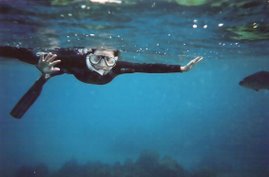
aerial of the reef around Unguja island, Zanzibar


hallway at Beit-Al-Amaan ("house of peace")


chillin at Beit-al-Amaan's lush living room


Zanzibar.


Ahh… hearing the name alone makes people feel like they’re on an exotic tropical island. It needs no other embellishment.


Apparently the name was originally “Zangh Bar,” which means “Coast of the dark people” or “Negro Coast” in Arabic. For centuries Arabic colonizers and merchants used it as a base for its Indian Ocean slave trade. It’s a bit more racist and less romantic when you know that, eh?


The rest of Team Tanzania (the guys who are part of the crew from my department at UCSF who come to Tanzania regularly) was exuberant and happy that we were finally on a holiday in Zanzibar. Everyone loves Zanzibar. Even John and Royce, who were already back in San Francisco, were ecstatic for us. They all knew that we had worked hard and felt wasted.


Who wouldn’t love being in a gorgeous coastal environment with the richness of blended African, Arab and Indian cultures?


Zanzibar is gorgeous and lush. It still has intact, healthy coral reef full of fish around the islands other than Unguja, where Stone Town is.


But there is an element of Havana, Cuba in it. The concept of a former bastion of ill-gotten wealth which fell into chaos and redistribution. But unlike Havana, the new Zanzibari government was not very organized about the redistribution of land and buildings. Stone Town was previously a wealthy slave and ivory trading port, built on the backs and blood of black Africans from the interior. Countless black Africans were killed in the process. After centuries of slavery, there was an uprising by black African askaris (soldiers) in the 1960s which killed off nearly 20,000 Arabs. Since there had been quite a bit of intermarrying, it was probably quite arbitrary who got selected for murder – perhaps the lighter-skinned people, perhaps the people who owned more stuff. People say that Zanzibar is now a happy blend of people, but I wonder how much of this is the sheen sold to tourists like me.


By the end of my two months in Tanzania, I was happy to wander the alleyways of Stone Town with just my compass guiding me… and enjoy the warmth of the Indian Ocean and the living beings in it. But I am very ready to go home to San Francisco.


And I am happy that I did not decide to live abroad semi-permanently for my next job.


I would be a terrible expatriate. I don’t enjoy any part of that culture: creating insular little communities, living in a gated house with a house-girl and askari, driving around in a hulking SUV, having others cook and clean for me, going out to bars with the other ex-pats – most of whom drink and smoke and generally do nasty things, especially to the people native to the community (i.e the black folks). It is an obnoxious and unmindful lifestyle.


If I move to a place like Moshi or Tabora or Kisumu, I might try to make better friends among my black colleagues, but I could never really be integrated into their communities. There would be too many barriers from both sides. There are some ex-pats, especially the white people, who say they have good Tanzanian friends, but on closer inspection, theirs is really a paternalistic relationship – the ex-pats “buy off” their “friends” by giving them CD players, extra money, nice dinners at restaurants, scholarships. I cannot build friendships in this way. It’s just not balanced or sincere when it is clouded by favors.


It has become clear to me that I travel to East Africa really to work and build better HIV/AIDS care – not for vacation, not for the love of being an ex-pat, not for the lifestyle. Of course, there is the special-ness and challenge of working in a totally different culture from my own. But the magic veil of “otherness” wore off early on, when the reality of the work, of the sick and dying patients, set in. My skills and training have value here, if I use them well.


So – I am happy to return to my own “native” community in the Bay Area. This is where my partner and my family are, where I am building a sangha, a community of people who support my practice in being a good person, a person of lovingkindness.


With their support, I can rebuild my strength and resolve to return to Tanzania in July to continue this work.

Sunday, February 10, 2008

Tanzania Kazi: work

What am I really here to do?

A couple principles to keep in mind while working here:

-Our ultimate goal here is to make ourselves unnecessary.

-It is not impossible to get things done; it just might take much much much longer than you would ever expect.


The first three weeks of my time in Tanzania consisted of prepping for and running two week-long training courses on the management of HIV/AIDS.


The first training was in Tabora, at Kitete Hospital, one of the government-sponsored district hospitals. Teaching a mixed group of ESL nurses, pharmacists, clinical officers (equivalent of NPs or PAs) and medical officers (equivalent of general practitioners) on the finer points of HIV opportunistic illnesses and treatment failure is an interesting challenge. There were a few Makapa Fellows in the group – these were clearly the best and brightest of the bunch. Makapa Fellows are part of the program funded by the Clinton Foundation – they are nurses, clinical officers, medical officers and pharmacists given extra training in HIV/AIDS and higher-than-normal salaries to work in exceptionally under-resourced parts of Tanzania. And then there were a few old-school nurses and clinical officers who had very little English proficiency (the entire course was taught in English with very little Kiswahili mixed in) and health management proficiency (yikes). It was quite a spread.


It was my first time as a trainer in this group – Royce Lin was the lead trainer (he’s done this training many times already), and we had a few Tanzanians doing pieces of it: Elitumaini Mziray taught about HIV drugs and neurological complications; Amos Nsheha taught about pediatric disclosure issues; Werner Schimana (a German ex-pat) taught pediatric HIV drug issues. I taught a big section on pulmonary complications of HIV (TB, PCP, bacterial pneumonia), which I must admit was a big hit, as well as a difficult section on treatment failure. The usual Sub-Saharan African snafus happened, including several power outages (after I had spent hours putting together a great slide set of chest x-rays, etc.) and hospital meetings in our training room that went an hour over its slated end time, thus delaying us for an hour.


This is an exercise in patience and in letting go.

I remind myself of this often.


There are some absolutely awesome parts of this type of teaching, such as seeing nurses doing a perfect pulmonary exam and asking the appropriate sexual history questions and speaking out about the treatment of TB to clinicians who are doing it incorrectly.


The second training was with the Elizabeth Glazer Pediatric AIDS Foundation (EGPAF, whom we are sub-contractors for here in Tanzania) program officers, many of whom were rusty in their HIV care and treatment knowledge. Given that they are helping Tanzanian district hospitals and clinics provide HIV care and treatment, they figured that it would be good to know something about the actual practice of it. They asked us for the training, so we trained them. Since they have NGO money, we spent the week at the Millenium Seaview Resort in Bagamoyo. Posh. Is this the proper way to spend PEPFAR (i.e. American tax-payer) money? Hmmm…