Showing posts with label kisumu. Show all posts
Showing posts with label kisumu. Show all posts
Wednesday, June 20, 2007
Kenya: video documentary
[You can play a short, 6 min, version of the FACES documentary here. Viva YouTube!]
It feels good to be doing creative work again. I’m excited to spend my time brainstorming about sequences, soundtracks, what clips to take out of the 10 hours of raw footage I have to work with. The process is amazing in itself: to be able to ask people probing questions about why they do the difficult work they do, to discover the intricacies of the community in which we work, to have a large group of children climbing over you to see what your filming, to climb the rocks of an island and battle thick swarms of lake flies to take footage no one else has. People are also generally excited to be filmed; it helps them feel appreciated and important for the work they do. Then I get to take all of this and turn it into a narrative that tells a story, constructed to emote what I want.
Rose-colored glasses aside, I also have to deal with the very frustrating aspects of being in Sub-Saharan Africa: the only equipment I have to work with is the stuff I brought with me, on my back. Don’t get me wrong: it’s crazy in itself that I own and carry all of the equipment I need and am producing this documentary, from start to finish by myself and with my own money. I’m proud I can do this (though I wouldn’t mind some help, especially with funding!) Still, I need to deal with some crazy situations, which make the adventure… well, more of an adventure. While on the islands, I had to make sure my batteries didn’t run out (no electricity) and that nothing fell into the water, since we spent 4 hours on leaky wooden boats every day. When the kids climb on me, I need to make sure that the camera doesn’t get dropped or otherwise broken. There is no one but me to fix it. And after digitizing only a small fraction of the clips I think I might use, m hard drive ran out of memory. All 100 gigabyes have been used, which leaves me no room to render or export the sequences I create. So I spend excruciatingly long hours digitizing, then backing up to DVDs, which I run out of. There are no blank DVD-recordable discs to be bought readily in Western Kenya. (Though I bet I can pay some of the guys who pirate DVD movies to get some blank discs… I know where to find them.) Everything has to be planned out just right so that I have the clips I need on the hard drive to make the sequence. All these challenges are time-consuming, but in the end they add to my experience and help me plan for the next time (i.e. bring a damn external hard drive!).
As is inevitable with documentaries involving NGOs and health care workers, people’s speaking skills are highly variable. There is very little of the interviews that looks good or sounds good on screen. I can probably only use 10% of what was filmed, and even then I need to cut out a ton of um’s and stutters and repeated statements. While doing the interviews, which are fun in themselves, you can tell who the good speakers are: Reson gives clear but long and comprehensive narratives; Steve can eloquently describe the touchy-feely philosophy of the organization, and Kwaro, given some time to prep, can give a succinct speech with the stats and facts that you need. All without stuttering. And with a decently loud voice. A few aspects of Kenyan culture don’t mix well with these interviews: people speak with very soft voices and tend to talk in overly formal circles, saying the same thing several times in only slightly different ways. I think that this is why Kenyan meetings are long and boring. And why a lot of my interviews are long and boring. And why Kenyans often complain that amerikans are too loud and direct.
Fortunately, Kenyans like to sing, especially at FACES. So to make up for the soft voices that speak in circular statements, I have some great footage of staff meeting songs and Kids Club chants. Good music, good singing, beautiful scenary, interesting work: this is what is saving the documentary from being ordinary.

Sunday, May 20, 2007
Kenya: FACES Home Visit
Home visits represent to me the quintessential experience of being a doctor. I get an amazing diversity of background and information about a patient from observing them in their home environment rather than in the clinic. I get the privilege of seeing how they eat, how the sleep, what they do during the day, how they interact with their family, roommates, neighbors. I can assess their sanitation and safety. It much more adequately satisfies the part of doctoring that is a bit of an anthropologist … but goes much further than the anthropologist by synthesizing the information into an intervention that is best suited for that particular patient / subject / person.
The downside of home visits is that often you uncover complicated and difficult issues that you can’t solve. We as doctors are trained all the time to solve problems and “fix” people. This of course is very difficult and a stressful expectation, in any setting – be it clinic, the hospital, or the home. If you go by yourself to do the home visit, which is what I do in the
We went to visit Margaret (pseudonym), a 22 year old with a rapidly falling CD4 count (from 500 to 200 in 3 months) and failure to thrive. She had also been pregnant and miscarried at 7 months at home – one month before our visit. The clinicians had been concerned about her weight loss and falling CD4 count, so they initiated her on HIV antiretrovirals and TB medications. She stopped coming to her clinic visits and the staff were concerned that her family was not supportive, so we decided to make a home visit together.
It started out very strangely. I sat back and let Kendi, the clinical officer, Elija, the community health worker, and Nicolas, the nurse, take charge of the visit. I also wanted to observe how they ran it. The home was small but very neat. Margaret’s older sister kept the two-room home very clean: swept, laundry done daily, food on the table for Margaret. Her sister greeted us at the door and sat with us during the interview. She seemed supportive. Margaret, on the other hand, was lying on a couch, barely moving, with an imperceptive voice. Her face was completely flat. She expressed no emotion, except later, when I sat next to her and asked some more questions. For the first 20 minutes, the clinic staff sat on the other side of the room, bombarding Margaret and her sister with questions, many of which sounded accusatory.
“Why aren’t you eating?”
“Have you been taking all your medications? Show us what you’re taking?”
“Why haven’t you picked your TB medications?”
No one shook her hand, sat next to her, examined her. They mostly spoke with the sister. After the 20 minutes had past, my assessment was that Margaret was suffering from untreated severe major depression, almost a state we call catatonic depression- where the patient is so depressed that they don’t move or speak. She barely spoke, in a whisper, and gave simple one-word responses. When I sat next to her, shook her hand, and spoke with her with much softer tone, she started to cry. She shed tears in the near-catatonic state: no change in her flat expression but now she had tears and mucus running down her face. After she started to wet her much-too-big t-shirt, she grabbed her kanga, which she was wearing as a skirt, and wiped her face. She told me that she was unable to walk, unable to motivate to eat, and lay on that couch all day, not speaking to anyone, not doing anything. She just cried when I mentioned the miscarriage. She didn’t say anything about it. But at least I addressed the elephant in the room.
She had no cough, nothing focal except for muscular back pains. She looked very very wasted: her skin clung to her bones except where it was stretched out for her recent pregnancy. Her eyes looked ghostly and glowing white in the darkness of her home, which has no electricity or windows. I held her skeletal hands while she tried to stand up during my neurological exam. She was very weak and her muscles contracted, stiff and thin.
In retrospect, I suspect that her CD4 drop was in large part due to her pregnancy (it was checked during the start of her third trimester) and that she probably doesn’t have TB, though in a person who was not as severely depressed as her, I would definitely think more seriously of treating for it empirically. I think that she has severe untreated depression, and while the clinicians in
Saturday, May 12, 2007
Kenya: name-calling

[photo at left: me addressing the FACES staff crowd during my CME talk on "cough and shortness of breath" in HIV+ clients]
The staff at FACES love it that I have a Chinese name. During the first staff-meeting (when I met everyone) I told them a story about my Chinese name and how people constantly mispronounce it, so now a lot of the staff are making an effort to say my name properly. They do much better than my non-Chinese American colleagues, who mostly don’t bother to try. Often in the mornings I will be greeted at the clinic with a hearty handshake and a “Hello Sophy Shiahua, How was your morning?” The Luo staff do a particularly good job pronouncing my name. Apparently Luo also has a bunch of tones, so speaking with specific intonations come naturally to those who also speak Luo.
The nurses have given me a Kenyan name. The nurse mamas (older women) in Eldoret gave me the Luo name “Akinyi,” when I was last here in 2004, which means “she who was born in the morning.” They just guessed that I was born in the morning, which is correct. However, when the nurses here in Kisumu gave me the name “Achieng,” which means “she who was born in the daylight,” they said that it was more appropriate since I was born around
Now my full name is (drum roll and deep breath, please)…
Sophia Sophy Shiahua Akinyi Achieng Pokey Resister Wong
Monday, May 7, 2007
Kenya: photo album
This is my online photo album of photos from Kenya. It includes clinic and work photos from Kisumu (FACES), Eldoret and Turbo (AMPATH), daily living, and adventures, such as to Kakamega Forest. I'll keep adding to it during the trip, so please visit the link periodically during May 07!
 |
| Kenya, April-May 07 |
Monday, April 30, 2007
Kenya: faces of FACES
Check out a slideshow of the fabulous staff at FACES, taken for a photobook i am putting together:
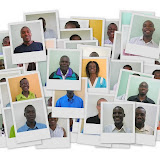 |
| faces of FACES |
Sunday, April 29, 2007
Kenya: FACES Clinic & expansion of HIV care

[FACES Kid's Club - older kids posin on the staircase]
It is astounding how much HIV clinical care has expanded in
You can read an article about the AMPATH program in Eldoret here: http://alumni.indiana.edu/magazine/kenya.shtml
Imagine providing HIV management and treatment in a place without roads, electricity or clean water. It is still like that in many places. But now these places are remarkably better staffed, better resourced and are seeing 10 to 20 times the number of patients. The Kenyan government has trained young medical officers in ARV management, and now Kenyan 20-somethings are running HIV clinics with 10-20 staff and managing huge public health programs. I’ve never witnessed such rapid development and growth in healthcare. And I am fortunate enough to be a part of it.
Back in early 2004, the AMPATH program in Eldoret had only a couple thousand patients involved, and only a small fraction of those on ARVs. We were just beginning to roll out Triomune for free or heavily subsidized rates. Of all the people who needed to be on ARVs due to advanced HIV disease, less than 1% of those people were getting it. Now AMPATH is serving 33,000 patients, runs several children’s programs and innovative farm-based nutritional and micro-enterprise programs. In
I will visit Eldoret and the AMPATH program at a more rural site called Turbo at the end of this week. It’ll be really interesting to see how much it has changed.
FACES (Family AIDS Care and Education Services) is the clinic where I am now working in Kisumu. First, I should note how great it is to work at a place where people are incredibly welcoming and happy that you’re there. It creates a much happier, positive work environment. The staff at FACES seems to naturally create a constructive work community. Similar to AMPATH, FACES started with a partnership between a Kenyan medical site in Kisumu, and a US-based institution. In this case, it was the CDC and UCSF Ob-Gyn program. They had started with PMTCT (prevention of mother to child transmission of HIV) and microbicide projects, and then expanded their clinical care to include one of the biggest glaring health needs: HIV clinical care for adults. This is where the UCSF ASPIRE and internal medicine residents (like me) step in. We can actually be helpful in training folks here to manage complicated adult HIV cases.
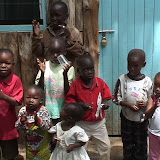
Their family-based model is great in involving whole families and encouraging everyone in the family to be tested and treated as needed. It is much more holistic than dividing families up into internal medicine, pediatrics, and ob-gyn. It also includes home-based, hospital-based visits by staff, nutritional supplementation and counseling, as well as programs such as “Kids Club” and “Family Empowerment” workshops. [I attended the most recent Kids Club yesterday and got some really great photos and video of the kids. It’s not hard to get great pictures of kids- they love the camera. I’ll post some up.] FACES also has an integrated lab and pharmacy, so patients can get all these services on site, rather than having to trek around town to get blood drawn and their medications. The approach is so much more comprehensive than most of our out-patient clinics in the
The FACES clinic in Kisumu started out in September 2004 with just a few hundred patients and now sees over 4,000 patients, most of who are on ARVs, including children. It is truly inspiring to see how far HIV care in
I’ve seen patients for three clinical days during my first week at FACES, and already I’ve initiated (alongside a clinical officer) several people on ARVs, diagnosed ten or more smear-positive malaria cases, managed people with extrapulmonary TB on ARVs. I’ve seen with Liz and Everia (a Kenyan FACES clinical officer) a young man stumble into clinic with left-sided pain and weakness and treated him for presumptive toxoplasmosis, a parasite that can create masses in the brain causing focal neurological deficits. I see about 20 patients a day… and I’m relatively slow! It’s a very very busy clinic. And amazingly, despite my newness to this clinical site, I feel helpful: seeing patients and helping clinical officers think about the differential diagnosis and treatment options, assisting with paperwork and getting the patients the treatment or investigations (labs and studies) they need.
You can read more about FACES at their website:
http://www.faces-kenya.org/index.php
I also have a number of projects that I created for myself and have been assigned to do by the rotation. Because the clinic is so busy, it feels a little crazy to add so many things on top of the clinical work. However, it is the diversity of my work that keeps me engaged. I think I would go crazier if I saw patients from
1. video documentary on capacity building and training at FACES (my own gigantic project)
2. the faces of FACES staff photo book (my own project)
3. CME (continuing medical education) session on HIV and pulmonary (lung) diseases
4. mentoring clinical officers and nurses
5. organizing the rotation for future UCSF residents with proper orientation materials and resources so that they are useful and get the most out of being here
6. less formal educational workshops for clinical officers; i will do one on a subject they choose
7. journal club (not my favorite thing to do because it is highly entrenched in academia, but it has become part of the rotation)
8. developing sections in the clinical officer handbook; i will likely tackle sections on HIV and pulmonary disease, diarrheal disease (my personal fave!)
Somewhere lodged into this list is the clinical work of seeing patients. I can’t decide how to prioritize that because it always becomes a priority once I commit to seeing patients on certain days. I’ve decided to see patients for at least 3 days a week and spend one full day and some half-days on my other projects.
Yikes! It’s a lot to get done in the next 3 ½ weeks. Time here always goes so quickly.
Kenya: wiki moja, first week explorations

[photo: me, baby Shawn, and mom Triza, who is also the pediatrics medical officer at the Nyanza Provincial Hospital]
*adjusting to life in Kisumu
I intended to have a restful first weekend in Kisumu. I was finally able to chill out after my long journey and busy tourism in
But it was poa (cool) because I was able to meet up with my friend Kibachio, who happened to be in town for a Kenyan Medical Association meeting. He now is a Medical Officer in the provincial
I spent the next few days incredibly jetlagged, probably the worst I’ve ever been coming to
*Kisumu is big and diverse
Kisumu is a big city. Way bigger than I remember Eldoret being. The largest market in western
If Liz wasn’t here for my first week in Kisumu, I would have gotten totally lost going to and coming from work every day. There is so much construction and craziness downtown that it makes it all the more difficult for a directionless person such as myself to get her bearings.
We walk 3.7 km each way to the FACES clinic. I know because I took a taxi home one day and watched the odometer. Amazingly, the whole way is paved with nice asphalt. I really feel like I’m in a big city because of this. The walk would not be so bad, and in fact is mostly pleasant and allows us great exercise, except for the fact that you have to cross (unprotected) an undivided highway to Nairobi and walk on rocky dirt patches in order to avoid being hit by a swerving boda boda (see below) or a speeding matatu (privately-operated “public” transport vans). The roads are quite busy here. You have to share it with a wild medley of transport forms: people, carts carrying huge loads of petrol, carts carrying huge loads of chickens or furniture, boda bodas, bikes, matatus, tuk tuks (three-wheeled gas-powered covered vehicles for hire as a cheaper alternative to taxis), taxis, large buses, construction tractors, trucks crammed full of people in the back, trucks crammed full of various other goods, and oh yeah- cars. And of course there are no real traffic signals.
I’ve seen few mzungus here, relatively speaking. I see them mostly at the fancier stores and at the CDC. It’s nice not to be in a heavily tourist city. I even met a crew of four young men from
There is a huge South Asian population here, and the cottage I am staying at is in the upper-class neighborhood of Kisumu, called Milimani. Most of the families here seem to be very wealthy black Kenyans as well as wealthy South Asians (South Asians here tend to be merchants and owning class). Despite the obvious class schism, it is nice to have different cultures represented strongly here. Plus, it allows me to go out and get lots of yummy South Asian food ingredients, and buy delicious samosas, dal and dhosas for lunch.
As Kisumu is quite cosmopolitan, it also has a bigger diversity of tribes represented here. Despite the large Luo majority, the businesses and NGOs here have attracted folks from tribes all over
*boda boda phenomenon
There is a new mode of “public transportation” in
*
My pimples are gone, my color has returned, I walk 4 miles a day at 1130 meters, swim 20 laps every day, take most of my weekends off, work almost normal hours at clinic, and cook almost every meal. It’s amazing what a more relaxed culture and work environment will do for you.
*diarrhea
Alas, my GI tract has become immunologically oversensitive and wimpy from being in
Needless to say, on Kenya Day Six, I started having bad intestinal cramps and gas. Lovely, especially during clinic. The loose stool started on Thursday, Day Seven. I am proud at least to state that my GI system is at least strong enough that I didn’t develop the full traveler’s diarrhea of awful cramps and 10 stools a day. However, I was hoping to stave off the antibiotics and condition my GI tract more (don’t want to contribute to fluoroquinolone resistance!) but after three days of cramps, gas and gnarly loose stool, I decided that it was time to break out the cipro. Sure enough, twelve hours after taking the first dose, I am gas, cramp and loose stool-free. Yay!
Sunday, April 22, 2007
Kenya: Karibu Kisumu!

(photo above: sunset over Lake Victoria as seen from the Pabari cottage in Kisumu)
I had a very typical foreigner-in-Kenya entrance to
My taxi driver, Francis, was a very interesting young man. In addition to driving his (licensed) taxi, he works for a Kenyan pharmaceutical company which was apparently doing trials on an HIV immune modulator. He spoke about wanting to go back to school in order to go to medical school and eventually become a doctor.
I then embarked on another very Kenyan experience (though middle-class Kenyan, as it was quite safe): a hot, dirty, bumpy nine-hour Easy Coach ride from Nairobi to Kisumu on very broken roads. It felt a little crazy doing this after an eight-hour overnight flight from
I arrived in Kenyan time at the Kisumu Easy Coach terminal: two hours late. I had scared Vero, our wonderful Kisumu-based UCSF/UBC liaison, earlier when I didn’t call her till I reached Nakuru. She was afraid that something would happen to the lone foreign female traveling by bus from
Happily Vero and Liz helped me with my luggage into the clinic van, and drove me straight to the cottage that I am staying at for the next five weeks. It’s gorgeous. It’s tropical. It’s perfect. The woman who runs the cottage compound, Mrs. Pabari is a Turkish landscape designer. You can tell. She has an immaculately maintained tropical garden with plentiful flower and vegetable patches, koi ponds, frog ponds and a naturally heated lap pool. Not only am I in this lush natural setting, I also have a home with hot water, plumbing that works, electricity, and –get this- speedy internet access with an ethernet connection.
The only thing tough about this place is 1) the bugs, including mosquitoes and 2) the immense racket that the nighttime animals make. The random outbreaks of hornbills, bullfrogs, dog barks and howling contests keep this jet-lagged insomniac wide awake at night.
What’s gross? Ants one-inch long invading your home.
What’s grosser than gross? Killing a large ant and finding a swarm of smaller ants eating and liquefying its body within 5 minutes.
Subscribe to:
Posts (Atom)