Sunday, August 24, 2008

Kahama: Dude Town from Hell


[above: dude carrying a load of sponge-bed-square-pants mattresses for one of the many motels for migrant miners along the main road in Kahama]


Kahama is a dusty dry dude town on the highway to Rwanda and Burundi, between Tinde and Bukombe. Its existence depends on gold mining, and all of its industry is built around mines and miners. That means a town full of miner dudes, their dude bars and dude brawls, and their ladies-of-the-night. With this set up, it’s no wonder that this mining region is Tanzania’s hot bed for HIV transmission.


The streets of Kahama consist of piles of red dirt and dust, dried garbage, and tons of motorcycles, bikes and transport trucks. There are huge numbers of young men hanging out at all times of the day, drinking and cat-calling to the very few women around.


Today, on my way walking to and from the hospital, I received the following greetings, all from men, of course:


Ssssss, SSSSssss. (~20 times)

Mchina, mchina! (~10 times)

Wao, mzungu! (~10 times)

Hee haw! (~5 times)

Hee haw! accompanied by a few sloppy attempts at a martial arts kick (1 time)


I have no idea how “Hee haw” became widely used as a way to name-call Asian-looking people. As far as I know, nothing in the Chinese language sounds like a donkey braying.


It’s not exactly a hospitable place for a young-looking Asian female (i.e. me).


My M.O. is generally to keep walking and ignore the obviously disrespectful attempts to get my attention. Except the faux-Chinese attempts. Then I say back in loud Kiswahili, Si Kichina, “That’s not Chinese.”


It was also difficult to ignore the young buck who revved up his motorcycle when he saw me coming and rode wheelies around me and cornered me every time I tried to escape. He was probably trying to show off and give me a ride, to which I replied “Nina tembea, asante.” (I’m walking, thanks.”) But he continued to follow and corner me, making a bunch of overtures in Kiswahili, most of which I didn’t understand. When he wouldn’t leave me alone, I sprinted across the street (in traffic – yikes! Frogger move) and onto a side alleyway where he couldn’t follow.


This is mostly irritating and probably harmless. I pay for my northern hemisphere lighter-skinned privilege by being treated as a stereotype on the street. Oh well – a minor annoyance. Not pleasant, but not deadly.


Where it becomes a problem for me is when it gets in the way of work. Which it does. On this particular visit to Kahama, it took the clinic-in-charge, Dr. Malulu (who is actually an assistant medical officer – kind of like a physician’s assistant) three days before he addressed me as “Dr. Sophy.” In contrast, he had been addressing Guy as “Dr. Guy” from the very first moment we arrived. The difference between Guy and me is that Guy is a tall white man – and that Guy is a nurse. On previous trips, Guy would actually say, “Please call me just ‘Guy.’ I am a nurse.” And he would call me “Dr. Sophy” to help remind others. But he has stopped doing that. The stereotypes live on.


The end result is that I am left to prove myself alone. A few days of inserting mentorship on complex medical management and demonstrating some mastery of antiretrovirals and diagnostic procedures – and then sometimes, just sometimes, they start believing that I am a doctor. It’s more than a minor annoyance because it means that there are often a few wasted days before people become open to what I can teach and contribute to their work. Since we are given only 4-5 days at each site, this wasted time becomes significant. Such stereotypes and prejudices are a major barrier to efficiency and learning.


But they are reality – the stereotypes and prejudices are constantly present. When I am here, I have to learn to deal with them. The question is whether I want to continue to deal with them in this way. My northern hemisphere lighter-skin privilege gives me a choice on whether or not I want to continue working in rural Tanzania doing these one-week long mentoring sessions and trainings.


I don’t.


After four months of doing this, I have decided that this way of providing mentorship in HIV care and treatment is inefficient and ineffective – for me. I can only speak for my experience and assessment.


My best experiences in global HIV work have been from rooting myself in one specific community, getting to know the people, and building working and mentoring relationships with them. You can ask Flo and Rosie at FACES in Kisumu, Kenya. Or Kibachio from our days in Eldoret, Kenya. These are the types of enduring work relationships I like to cultivate. And being in one place doesn’t mean that I don’t have far-reaching influence. At FACES, for example, I would have been able to reach dozens of providers and help decide on clinical guidelines that would affect almost 40,000 patients. I’ve decided that committing myself to one particular community is a much more efficient, effective and sustainable way for me to do global health work.


That’s what I’ve decided to do next.


As for the present, I have one more case discussion tomorrow morning at Kahama district hospital on a patient who developed hepatotoxicity (liver failure) on TB therapy and HIV antiretrovirals and another patient who came in with mitral valve disease leading to atrial fibrillation and heart failure, probably due to rheumatic heart disease – from streptococcal bacterial infection, a common cause of heart failure among young adults here.


Then – kwaheri Kahama!


Sunday, August 17, 2008

The waxing moon, three cats, and a bowl of tiny lake anchovies.

Tonight was a welcome departure from the norm. After a long day of training and some disappointing sessions from the doctor I’ve been trying to train (mostly disappointing to me and probably of relatively high quality for the Tanzanians - which illustrates the poor teaching they are regularly subjected to), I did not feel like socializing with the rest of the crew at dinnertime. I had ordered dagaa (tiny lake anchovies in a tomato stew), ugali (maize mash) and bamia (okra) this morning, and asked for it to be ready at 7 pm. I wandered to the outdoor dining area of the Karena Hotel and saw that Guy, Jenny and Werner had found an older white bearded male friend. They were all drinking and making loud conversation. I had an instant feeling that I would have a hard time enjoying dinner in such company and decided to sit in a different corner alone.


I should do this more often.


It was one of the best meals I’ve had here: I was able to fully concentrate on the Five Contemplations for my meal, eat in peaceful silence and pay attention to what and how I was eating. Eventually I was accompanied by three lovely little wild cats. They patiently waited for me to give some of my dagaa to them. We ate dinner together, silently. They provided the perfect company for me tonight.


When I finished, I sat back and watched the clouds roll over the bright waxing moon and create funky patterns. I enjoyed watching the luminescent lacy swirls.


The wait-staff was totally weirded out that I was sitting alone. It took them some time to adjust. “Why are you sitting over here?” I told them that I was tired. “Hey, the others are over there!” “Should I bring your food even though you are not sitting with them?” “Do you really want to eat your food separately?” It is unusual in Tanzanian culture to choose to sit alone. But they eventually embraced the idea and treated me very respectfully. In fact, I felt that they treated me with much more friendliness when I sat alone today than when I’ve sat with the others. That was interesting. Maybe they were being sensitive to my tiredness.


Ah, it was so nice, so peaceful.


And now, with the crickets in the background and evening prayer song emanating from the nearest mosque, I continue to enjoy my night.


Uksiku mwema.

a day in the life…

[above: HIV Care and Treatment Refresher Training participants, trainers and UCSF help-staff (i.e. the team i work with in Tanzania) in Shinyanga, picture taken on 15 August at the Ngoloko Hostel, Catholic Arch Diocese centre; this was a historic Refresher training because all of the direct trainers were Tanzanian and a majority of the training was conducted in Kiswahili! i served as the content coordinator and trainer of trainers.]


I have two radically different work schedules here in Tanzania. One is for trainings, and one is for mentoring of mentors out in the field. Each of these programs last one work week, so we tend to travel from place to place on Monday mornings, return to our favorite regional hangout on Friday afternoons, stay over the weekend, and leave again for the next destination the next Monday morning. That’s when I have a say in the travel schedule. When I don’t have a say, we often end up traveling over the weekend, so we end up not really having any days off. I count traveling as work. It’s more tiring than my work – and far more dangerous.


No matter where I am in Tanzania, I try to follow this routine:


5 am: occasionally get woken up by the morning call to prayer from the local mosque (this happens regularly in Moshi, Stone Town, and Bukombe)


7 am: wake up to my cell phone alarm for real; use the bathroom, wash up, and make the bed


7:05 am: sitting meditation (I have been meditating on the Visuddhimagga) followed by stretching exercises


7:45 am: get dressed and go to breakfast. When the breakfast is good (as it is at Bristol Cottages in Moshi and The Orion in Tabora), I can get a big bowl of fresh fruit, reasonably fresh bread (toasted), and eggs over easy. I bring my own loose tea in a tea strainer from home, and have a cup of jasmine green tea. When the breakfast is bad (as it is at The Karena Hotel, where I am staying now in Shinyanga), I bring one of my oatmeal packets and make myself some instant oatmeal to have along with my tea. I’ve also gotten into the habit of ordering my dinner at breakfast. It’s so nice to have it ready when I return so I don’t get hungry and annoyed waiting 1-2 hours for it to appear. (Yes, that’s typically how long it takes to get food after you order it here.) Plus, it reduces the stress on the chef and staff so that they don’t need to scramble to prepare food for the impatient wazungu. Afterwards I return to my room to brush and floss my teeth, get my backpack.


8:15 am: leave for work (in a small town, by foot; in large or further locations, by taxi or EGPAF vehicle)


8:30 am: work! Here’s where there’s some divergence-


Trainings…

are held in conference venues in the regional centers, such as Shinyanga (where I am now), Tabora, Moshi or Arusha. We live comfortably with access to most of the modern conveniences: electricity, plumbing, hot water for showers (except occasionally in Tabora), vegetables. Eating vegetarian is not very popular in the rural areas. When you eat out, you’re supposed to be eating meat!


Trainings generally following this schedule:

8:30 am: opening schmooze, energizer, wait for trainer to arrive

8:45 am: morning session

10:30 am: chai break (tea or coffee, stale bread, egg, fried thing)

11 am: continue morning session

1 pm: lunch

2 pm: afternoon session

4 pm: soda break (Coca-Cola monopoly sodas – coke, Fanta, Sprite, other junk I don’t drink)

4:15 pm: complete afternoon session

5-5:30 pm: finish the day, figure out how to get back to our hotel

6 pm: return to hotel, wash up

7 pm: dinner


Mentoring visits…

vary day-by-day and site-by-site. Some days we stay at the district hospital clinic and teach or mentor folks there. Some days we go to one of the lower level health facilities, which may take a few hours to get to on rough road, and ideally mentor the district mentors there. When we mentor mentors, it means that I am meta-mentoring. (Follow?) I am working with one of the clinicians from the district hospital who’s been managing HIV-infected folks for at least a year, observing her/him mentoring one of the inexperienced clinicians from the lower-level health facility. It can get quite difficult when something doesn’t happen quite right (i.e. something harmful to the patient is about to occur). I then have to respectfully discuss the issue with the district mentor, and suggest that s/he mentor and support the lower-level health facility clinician to correct the problem. It’s two steps removed from seeing the patient myself.


All of this happens in Kiswahili, so I need to derive quite a bit from body language and my limited command of Kiswahili. When something seems critical, and I don’t think I understand, I will ask the district mentor to interpret for me.


In an ideal mentoring visit, this is what the week looks like:

M- arrive around noon, meet and greet the District Medical Officer, schmooze, meet the Hospital in-charge person, and meet the HIV clinic in-charge person who usually gives us a tour of the clinic and the district hospital. In the afternoon, I teach some content (TB-HIV coinfection, IRIS, ART review, etc.)

T- district clinic mentoring

W- lower-level health facility mentoring of district mentors

Th – “ ”

F- in the morning, district clinic mentoring and feedback meeting. Prolonged good-byes. In the afternoon, return to our weekend location.


In the evening, I have been eating dinner with my work colleagues. It’s usually a few hours long if I haven’t ordered at lunch time:

7 pm – order dinner, drink soda water or tonic water to bide my time and curb my hunger

8-9 pm – receive dinner and eat (typical meals for me: pilau rice with vegetables, white rice with beans and spinach, grilled fish in tomato stew with plain white rice and cabbage, palak paneer, dal fry)

10 pm – finish up dinner and conversation, return to room, shower if I haven’t already

10:30 pm – email using our super-cool USB sim-card modem which connects us to the satellite internet system via local cell phone carriers.

11 pm – stick in ear plugs, put down the mosquito net, take my malaria prophylaxis, sleep.


Lala salama! Enjoy your dreams.

Monday, August 11, 2008

Bruce Lee and Jackie Chan in Tanzania!


[above left: Tanzanian stamp honoring The Scholar and the Athlete, Bruce Lee… and above right: Tanzanian stamp sheet honoring Jackie Chan (The Clown and the Athlete?)]


Yes, my people are AWEsome. My colleague Elitumaini told me the other day that Tanzanians view Chinese people as friends. “We have been a socialist country, and so for some time the people of Russia and China helped us build our roads and schools and hospitals. Chinese people are our friends.”


While the people of Europe, US, and colonial South Africa exploit Tanzanian labor and natural resources, the people of China are helping Tanzanians build their own infrastructure. Granted, there are a number of opportunists here who have set up businesses, but apparently the Chinese business people are not seen as exploitative as the South Asians or Europeans. Nor do the Chinese people seem to pretend to assuage imperialist guilt by setting up feel-good-do-little NGOs. There are many Chinese doctors and civil engineers here quietly doing the work and not making big noise about it. It is a very different presence.

Even the Yellow Ones!


Bukombe is a trip. It’s a diamond and gem mining town in the interior of Tanzania, on the road towards the Rwanda and Burundi borders from Nzega and Shinyanga. Because this region is built around the mining industry, it’s filled with young men from all different parts of Tanzania (and other East African countries) who are trying to make a living from the hard labor of mining. The presence of many young men with intermittent cash jobs creates a robust alcohol and sex work industry. And this, in turn, results in a high HIV prevalence rate, around 15-20%.


It reminds me a bit of the islands of Lake Victoria, where there are many young male fishermen who will get boluses of cash for the fish they cash, fueling an economy of bars and sex workers. Unlike these islands, Bukombe is on land and has decent infrastructure (a paved road! electricity! running water!) so it doesn’t quite feel as wild.


Working and living in a town of men with excessive drinking habits is not my idea of fun. But there is much work to be done here in the realm of HIV care and treatment. So here we are in Bukombe.


We are celebrities here. Or rather, Guy and Jenny, my white colleagues, are celebrities here. When they sit at a local bar drinking beer, men around them offer to buy them more alcohol. Children surround them and simply stare, with their mouths open in wonder.


“Oh, I am so happy to have white man here in Tanzania!” people shout. (I’m not kidding.)


Guy and Jenny are the King and Queen of Bukombe. I am the weird alien attachment. One particularly drunk and overly “friendly” man bought Guy and Jenny several rounds of beers. I don’t know how, but Guy seems to enjoy the attention. I made the mistake of joining their table and being part of their court. Maybe I’m their joker. So I also became an object of conversation.


“We are all under One God!” declared the drunk man. “Even the Yellow One!!” he said, slapping my leg.


He pressed his hands around his head, seemingly to shape an Asian hair bowl cut with his hands. “Even the Yellow One, like this!”


He pressed his fingers against his eyes, squishing his eyeballs in. “Even the Yellow One, like this!”


“Oh, even the Yellow Ones who have bad haircuts and can’t see – they are also under the same god. Wow, is that so?” I said.


“Yes, and even me, the Black Man. We are all under One God.”


He laughed and slapped my palm.

Monday, August 4, 2008

chakula cha mchana: lunch at Tanzanian family homes


[above: (picture on left) Young Whan, Bibi and Babu of Valerie, sophy (picture on right) Valerie, Bibi, Babu, cousin, sophy, cousins in the front]


Tanzanians have a wonderfully welcoming culture. You don’t necessarily experience it as a tourist – Tanzanian tourist culture is an entirely different beast. You really have to be living or working within communities that are outside of tourist areas to get that Tanzanian warmth.


Probably in part because we are the token lighter-skinned foreigners, we frequently get invited to peoples’ homes. “You must come visit my homestead,” women will often whisper into my ear. There is no date set, no time set. Somehow, it magically happens, usually at the last minute, and I end up sitting in someone’s living room as their guest.


First, there are the innumerable and respectful greetings (see the previous entry on Kiswahilish). “Shikamoo marahaba jambo sijambo mambo poa safi habari ya nyumbani salama nzuri mchananjema na wewe pia.” Valerie’s grandfather, who has served in the Tanzanian military, and was part of the battle to remove Idi Amin from power in Uganda, was as gracious as always and chatted with us in Kiswahilish about world politics and Barack Obama. “McCain is really too old!” he said repeatedly.


There is always food involved. At Valerie’s house, I had yet another delicious traditional meal with ugali wa mahindi (fluffly light maize mush) na kabichi (cabbage) na supu ya nyama (a beef stew, of which I just took the surrounding potatoes and stew and left the beef). Sundays and Fridays are meat nights at Valerie’s house, and they had leftover beef stew from the day before which they saved for us for lunch.


At Jesca’s spacious and well-appointed home, we had one of my favorite meals: dagaa na ugali wa mahogo na mahindi mix (small lake anchovies with cassava and maize mush). At Editha Kwezi’s home, we had pilau na kachimbari na supu ya kuku (spiced rice with spicy tomato and onion salad and chicken stew). All was delicious.


It’s infinitely better than the pseudo-westerner food we eat at hotel restaurants.


There are, of course, many awkward moments of miscommunication and silence that come with speaking different primary languages. There’s also the gospel video phenomenon, such as at Dr. Kwezi’s home: videos of Tanzanian gospel choirs singing and clapping and dancing about how the fires of hell will burn all the traditionalist heathens unless they convert. There was even one video of the Shingyanga choir that included depictions of heathen Chinese people flailing about with fake kung fu moves. They were followed by the flames of hell.


Sometimes people pick up the fact that I take a moment of silence before I eat. “Are you praying?” they ask. “Ndiyo, yes,” I reply. A few people have asked me if I am Christian. “I am Buddhist,” I’ll reply. This is met with a longer period of silence. Perhaps they are contemplating what it means to have a heathen doctor in their home. (Heathen doctor – does this make me a witch?) Still, people remain respectful to me. And I definitely don’t volunteer any religious commentary in homes playing the gospel videos.


Religion plays a critical role in bringing communities together, though unfortunately at times with overtones of hate. But when hope is one of the few things people have, it is important to protect it.

African Standard Time (AST): living in the present moment

Haraka haraka haina baraka.

If you hurry hurry, you will not receive blessings.


The pace of life in Tanzania, particularly the rural inland region of Shinyanga (where we are working now), is pole pole. It is a remarkable departure from our compulsive, over-scheduled, and micromanaged culture at home in the US. Here, we are less encumbered by abstract details. We deal mostly with what is in front of us.


On one hand, this means that life can be mellow and take on the façade of hakuna matata, without worries. In non-work life, I take on more of the chilled-out attitude of the people around us. I can focus on the people and events in front of me. My morning meditation is clearer, simpler. I have fewer detailed worries clouding my mind.


On another hand, this means that most things are unplanned and happen at the last minute. It makes work challenging for me. Long-term strategy and vision are relatively foreign concepts. I like to work with both clinical and systems issues, both things that need to happen right now and things that need to happen over the next ten years. My ability to make any big picture changes is muted by the fact that systemic advocacy and activism is not culturally acceptable (from Tanzanians, and certainly from foreigners like me). Systems issues are under the jurisdiction of people in power, who are frequently and unfortunately quite corrupt. It makes me wonder about how things can move forward.


Pole pole can feel terrible when I still see young people dying of AIDS. It is heart-wrenching when I see people spending their week’s salary to travel to an HIV primary care clinic which doesn’t have adequate medications in stock and provides sub-standard care.


It makes me think hard about how effective I am in providing clinical mentoring if I cannot also provide advocacy over systems issues. For me these go hand-in-hand. I do not self-potentiate if I am not working on both. I will need to take this into account and think hard about my role and next job in global health.

The Birds: Attack of the Marabou Storks!

Run, Jenny!

sophy cracking up – Oh no, they’re after me too!


Ndege mwabaru (marabou storks) rule Shinyanga. They are bigger than me. They circle in the sky. They will inhabit an entire acacia tree with their gigantic nests. They wander around town and hang out at eating holes, scavenging for food waste. They take off and fly right at you. They are freaky-deaky!

Shiblingi, Sponge Bed Square Pants, and Fat Ties

It’s Young Whan and Sophy’s Kiswanglish lesson time:


Shiblingi = Tanzanian money coveted by young urban people


Sponge Bed Square Pants = the unfortunate source of almost all mattresses in Tanzania


Mchizi kama ndizi = crazy like a banana


Shikamoo marahaba jambo sijambo mambo poa safi habari ya nyumbani salama nzuri asabuhi njema na wewe pia = a typical greeting to a single person, to be combined with vigorous hand-shaking, bowing and cheek-to-cheek facial contact


Tanzanian fashion trends we are importing:


Fat ties!! [check out the photo above] Yes, Young Whan will be rockin' his fat tie this fall. Where's yours?


Kitenge kraze!!! Yes, i am still obsessed with Tanzanian fabrics. Joelle connected me with a very talented young tailor, Rita, in Moshi. She’s made some beautiful and functional shoulder bags for me out of kitenge cloth. Kasimu, a tailor-man in Tabora, also made a nice tank top and long skirt outfit for me. Check out the collage below of my most recent kitenge finds.


HOT nights! (Hotel Orion Tabora is HOT!)

Imagine this scene: the gliterrati of the region assembled at our hotel restaurant and bar, socializing, drinking, smoking (a sign of affluence) and enjoying live music. The men are beefy and hefty – some are in suits, some are in cool t-shirts and jeans and chains. The women are dressed to the nines, in satin and sequins and heels, and have spent all day getting their hair done. That’s HOT: Hotel Orion Tabora. It’s where we stay when we’re in Tabora.


On the Sunday night that Young Whan arrived, we ate a hefty meal of dagaa na ugali wa mahogo, small lake fish stew with cassava mash. I was surprised to see so many people at the bar on Sunday – the usual day of rest and prayer. But sure enough, the bar was packed with men guzzling bottles of beer and women drinking sodas.


We went back to our room to rest and allow ourselves to digest the heavy cassava meal, with a plan to return to the restaurant-bar when the live music started.


Some time later, instead of live music, we heard a very long drawn-out serious-sounding speech in Kiswahili followed by an American pop song that would start, then suddenly stop, and get interrupted by more boring speech. The voice was muffled from our room, so I couldn’t quite tell what he was talking about. This abrupt starting and stopping happened many times more, and we got curiouser and curiouser as to what was happening out there.


This is what we found: four plastic chairs assembled in a line and five of the beefiest, well-dressed men dancing around them when the music played, and then brawling each other for the last chair when the music stopped. They had been playing musical chairs that whole time. Musical chairs.


That’s HOT.


I often have to redefine cool when I’m out here.

sophy's suture removal party

above:

Suture removal party, first attempt: Barbie manicure set (a.k.a. make-shift suture removal kit), suture removal team, Royce getting sterile, sophy’s sutures close-up, and attempt at removal (and finding out the scissors were way too blunt!)


Above: Suture removal party, second attempt: Kitete Hospital minor theatre with Dr. Amos Nsheha and Mama preparing sterile suture kit, sophy before removal, sophy, Amos and Mama during removal. Success!

Sunday, July 27, 2008

Frankensophy Takes Tabora


I realize that when Tanzanians see my face with the bandages and black eye, they are probably thinking about two possibilities: I was beaten by my husband (in their minds, most likely) or I was beaten and robbed on the street (less likely, especially as a foreigner – since foreigners are less likely to be beaten before being robbed). I get a lot of stares, and it’s hard to discern whether people are staring at me because I’m East Asian or because I look like I was recently clobbered. I also occasionally get a “pole sana” (“very sorry,” a way of expressing sympathy), which is a thoughtful acknowledgment.


I started feeling well enough to teach a few days after the accident, so I facilitated the afternoon training workshops on Wednesday and Thursday this past week in Tabora. I was running around the classroom, pulling people in to participate like I normally do, and forgetting that I had a big bandage in the middle of my forehead (at the third eye) and an obvious shiner. The participants were all very polite to me, though I wonder how they felt about being taught medicine from an injured person.


Coming soon: pictures of my suture removal ceremony – both at the Orion Tabora Hotel with Barbie manicure scissors (first attempt) – and at Kitete Regional Hospital in the minor surgical procedures theatre (second attempt).

it’s Tabora Time


[above: VIP lounge at Tabora Airport]

Tabora is a lovely city – one of my favorites - and starting to edge out Moshi as my favorite city in Tanzania. It’s got a decent-sized population of 250,000 people, but has a much mellower pace of life than Dar or Moshi. Because it’s off the beaten tourist path, we are among the very few non-Africans here and get a lot of attention. Thankfully it’s not the annoying tourism-type of harassment. It’s more of a curiosity and “Wow, a mzungu or mchina, I’ll try to say hello like we learned in English class.” People stare and express surprise or giggle at my existence. Sometimes they'll straighten up like they're in class (especially kids) and yell out (very formally) "Good evening, Madame!" It’s interesting to get this reaction for half a day, and then the attention gets tiresome. Being a freak is not that much fun (contrary to popular belief).


It was remarkable to arrive in Tabora after our car accident. Tabora is calm and soothing where Dar is all about the hustle. Immediately following the accident in Dar, I couldn’t see well because blood was gushing from my eyeglass-face-cuts, but I remember total chaos with a huge throng of people gathered around to stare at me and tell me to go to which clinic or hospital to get fixed up. A couple of Tanzanian women also came up close to Jenny and me and warned us to lock up the car, protect our belongings, and not trust anyone who wanted to bring us to a “hospital,” because it could end up a scam. At that time, all I could muster was “I don’t want to go to a hospital” (first thing out of my mouth) and “We gotta get out of here” (second thing out of my mouth).


Dar felt crazy and out-of-control. It is much nicer to recuperate in Tabora, where I really feel like I can be at ease. Adjusting to the slow pace of life can be challenging (try waiting two hours for food after placing your order when you’re hungry!), but ultimately it’s worthwhile to be in a place where people take the time to pay attention to each other.

Monday, July 21, 2008

Tanzania photos, July 08, album 1


Please click on the above album to see the full-sized album and review the photos. Asante!

car accident in Dar es Salaam (yikes) and The Ultimate Nerd Injury

[i considered posting a picture of my Frankensophy stitches, but refrained - there's a photo buried in my online album of my face the day after if you really want to see it!]

Being in a vehicle in East Africa is one of the biggest risks you can take. Animal mauling by lions and rhinos and hippos have nothing on vehicular accidents. After all these years of taking matatus / daladalas (“public” transport minivans that zoom around crazily like they are on amphetamines) and playing frogger by walking on very busy roads and biking in places with no organized traffic flow, I finally was in a car accident. It was a bad one – the car was totaled – and incredibly, fortunately no one was gravely injured. We were in one of the rare taxis with a good driver and air bags and seat belts.


It was a head-on collision - our taxi driver was good and managed to swerve off the road when an out-of-control vehicle went suddenly into our lane. Rather than hitting it full-on, we hit the other car from the side. The car we were in was a well-maintained Toyota (rare in Tanzania), so the air bags deployed, and the front seat passengers were restrained.


I was the worst physical casualty; I was partially restrained in the back seat (belt around my lap but not properly buckled in) and smashed my face (glasses and all) on the back of the seat in front of me and sustained a mild concussion and some facial lacerations. We all had minor musculoskeletal bruises and sprains.


I have the true NERD INJURY: facial cuts by eyeglasses. Can you get any nerdier than that??


Since my face was bleeding, I was taken to Aga Khan Hospital in Dar es Salaam and received cleaning and several stitches along my forehead and eyebrows. Having worked in many of the public hospitals in Tanzania, I was afraid of what kind of services I might encounter – eeek! But I really got great care – with better attention than what I would have gotten in the US. The hospital was clean, and my colleagues (all doctors and NPs) stayed with me to make sure everything went well. They’ve been super. Dr. Khan (fresh outta internship) did a very nice job stitching my face up.


I now have a black eye and forehead like Frankenstein – it’s a very interesting look for me.


I’ve rested up in Dar es Salaam for a couple days, but there is no time for dilly-dallying: off to Tabora tomorrow morning at 5:45 am for another training!

Panthers in Africa


[above: sophy, Charlotte O'Neal with necklaces for Mama Yuri Kochiyama, and YW]


Young Whan and I had the incredibly good fortune of visiting the United African Alliance Community Centre at Imbaseni Village.


Pete and Charlotte O’Neal are Panthers in Africa. Pete is a political exile from his days of activism with the Black Panther Party in Kansas City, Missouri. Charlotte, his wife, was also part of the Black Panther Party in Kansas City but is not officially in exile. They came to Tanzania in 1972 as urban activists, found themselves on four acres of wilderness at Imbaseni in the Meru Mountain region, and learned to build a homestead by hunting, farming, and building their own home.


Now integrated in the surrounding WaMeru community, they have established the United African Alliance Community Centre, a wonderful multidisciplinary centre for arts and education. They provide secondary school-level education to young people in the surrounding village as well as a rich arts and music program. They host high school and college students from (mostly) the US who do village homestays and/or stay at UAACC so that they can work and learn from the surrounding community.


Charlotte invited us to visit – I only had two hours in transit to Dar es Salaam, but Young Whan was able to stay a couple of days. It was wonderful to witness how much she and Pete have built and grown in this community. Check out the photos – and the websites below.


The UAACC website: http://www.uaacc.habari.co.tz/


“A Panther in Africa” documentary about Pete O’Neal: http://www.apantherinafrica.com/

Moshi


[above: aerial view of Kilimanjaro at dawn]


Ahhh, back in Moshi, my home away from home. It’s funny how familiar everything feels, even though we stay in hotels. I stay at the familiar Bristol Cottages, where Mama Sakina and Mr. Aggarwal and the staff take good care of me. I also have my friends Mei and Joelle, transplants from Chengdu, China and Southern California (respectively) who always welcome me back. They speak Kiswahili and know the lay of the land. It is always good to have advice and guidance from two local strong, sassy and experienced women who are also living far away from their native homes.

Plus, Mei owns Panda Restaurant in Moshi and cooks us real home-style Chinese meals. She uses winter melon and greens from her own garden. And she makes amazing fresh tofu each day!!! How spoiled can you get: fresh tofu and Chinese greens in the mountains of Tanzania.


Joelle first landed in Moshi to teach at an NGO secondary school focused on providing education to the most vulnerable young people (often orphans). She’s now moved on to a women’s village health and empowerment project in Shimbwe, a mountain village near Moshi. I am hoping to link Joelle and the women in Shimbwe to a potential microfinancing project in which the women would make cool accessories out of Tanzanian fabric to be distributed by a San Francisco-based textile artist.


The training in Moshi went as well as a training goes. There were 15 relatively interested and engaged participants from the Kilimanjaro region – lots of rural mountainous villages. As usual, the participants were a mix of nurses, clinical officers and medical officers of highly variable experience, English proficiency and background knowledge on HIV care and treatment. There were no pharmacists this time, though there should be. Happily, as a group, they seemed to understand some key concepts (antiretrovirals, TB diagnosis and treatment, treatment failure, paediatric HIV issues…) and did remarkably better on their post-training exam than on their pre-training exam. I only hope that they are able to remember what they learned and take it back to the health centres in which they work. That’s what really counts.

Chumbe Island


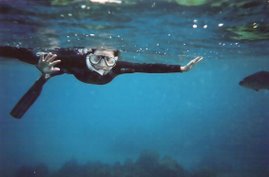
Chumbe Island is amazing. It is an island previously used as a military post and later bought by a German environmental NGO. It is now an eco-resort and official environmentally protected area. The result is a group of self-sustaining solar-powered and rain-water huts, an ecology teaching center, and the best diversity of coral reef in all of East Africa. I saw some really crazy coral types that I had never seen before while snorkeling in the protected zone around Chumbe. The water was a bit turbulent, so the visibility in the photos I took was limited – the photos don’t do the actual coral justice. You’ll just have to visit the island yourself.


The eco-bandas were incredible: rainwater is collected and filtered through extremely fine ceramics (something nutty like 0.0000002 mm pores) to remove even microbial particles. Solar panels collected enough energy to power a few lights and a little fan. A solar tank warmed the rainwater to take showers with. My shower was hot! The toilet was a compost toilet – and didn’t smell at all because it was done well and cared for. And the used water was filtered and recycled to be used to water plants.


It was cool to see a place staffed entirely by East Africans (most were local Tanzanians, and one transplant Kenyan) trained in and teaching hardcore environmental protection practices.


I only wished we stayed longer. Maybe another time.

Zanzibar tena (again)


This was my second trip to Unguja Island, Zanzibar. Stone Town was as beautiful and captivating and haunting as usual.


You may recall my stories from March 08 about the East African slave trade as it relates to the rise and fall of Zanzibar. This time Young Whan and I visited the old slave market in Stone Town, which still has the horrifying traces of the whipping post and the holding cells (75 people in a cell about 10 feet by 6 feet and only three small air holes). The Anglican Church built over it – an interesting relationship between colonial missionaries and the slavery emancipation movement. A couple of the missionaries became leaders in that movement. Many of the freed slaves converted to Christianity afterwards. Hmm.


While the East African slave trade was fueled by the Omani sultans (and thus the slaves were taken from various East African regions to the Middle East, Indian sub-continent, and Southeast Asia), they only started after they got the idea from Portuguese colonialists, who were stealing people from Mozambique as slaves to Brasil and Europe. Still the trade was just as brutal, and slaves were whipped with the tails of stingrays (with the poison and spurs intact) to test their “strength” and tolerability to pain.


After slaves gained their “freedom” in the late 1800s, many stayed in Zanzibar despite being far from home and created a new mixed African community. The Omanis still retained a great deal of power with the spice trade. In the 1960s there was a massive uprise among the black African Zanzibaris, and thousands of non-black people in Zanzibar were massacred. The Zanzibar Revolutionary government set up shop, and were said to govern with socialist and communist principles, redistributing land and homes to poor black Zanzibaris – but without as much planning, organization, long-term support, and (probably) financial resources as in Cuba. It’s really interesting to see the crumbling blocks of Stone Town Arabic style mansions next to the Soviet-style blocks of housing projects.